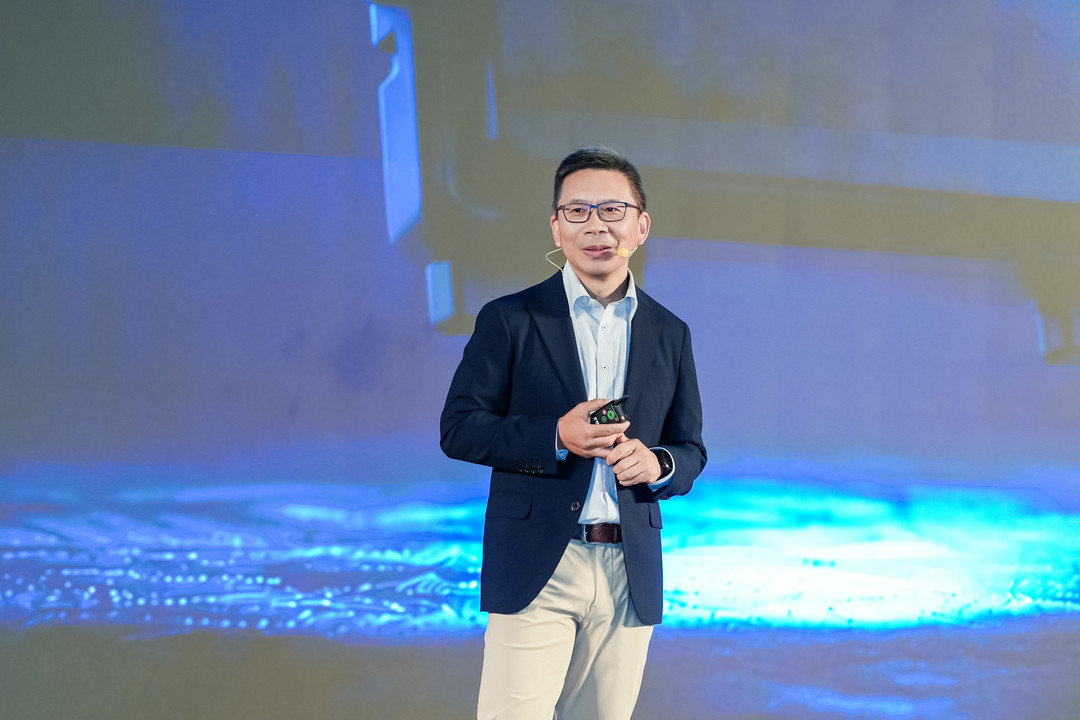
At the 4th AI-Defined Vehicle Forum held by Gasgoo on September 18, Wu Ziping, Chief Product Officer of Xinghe Zhilian Automotive Technology, detailed the company's roadmap for AI-powered intelligent cockpits. According to Wu, the core shift is from a reactive "you say, I do" model to a proactive companion that perceives, understands, and closes the loop on user needs.
Wu emphasized the need to unify user entry points, moving away from fragmented and passive responses. The system will integrate multimodal inputs from inside and outside the cabin, offering proactive services. Product clusters will focus on high-frequency scenarios like travel, music, and vehicle control, breaking the boundaries of traditional pre-installed apps. Users can customize their AI companion's style, choosing from options like caring or professional butler, with matching MBTI attributes, and can select visual representations such as in-car virtual images or physical robots.
Technical architecture and edge-cloud collaboration
Xinghe Zhilian's technical approach involves full-domain perception, extending from all seat rows to outside the vehicle, supporting cockpit-driving integration for large vehicles. Hardware like exterior microphones and DVRs is planned during the vehicle development phase to balance recognition clarity and safety. The AIOS system serves as the core hub, converting user needs into cross-domain vehicle execution, covering the entire chain from input to feedback.
Edge-cloud collaboration is a key principle. The vehicle side prioritizes safety, real-time response, and user privacy, while high-frequency pain points that cannot be handled locally are validated and moved to the cloud. This aligns with global data regulations. Wu stressed three iteration principles: building high-value sample data collection, monitoring user effects to adjust product definitions, and balancing multi-vehicle sharing with regional differences.
Scenario-based closed loops and ecosystem
In practice, the system recognizes scenario-based needs without clear app boundaries, completes user intent, and outputs optimal execution, covering content curation, audio tuning, sports event search, dining recommendations, and travel planning. For family scenarios, it offers warm interaction with children and monitors cabin anomalies for safety. A demo video showed the system detecting fatigue, family travel, and multi-command situations, automatically matching services.
Wu proposed building an in-cabin agent center with a unified platform for display and operation, allowing users to control agent activation and permissions. OEMs can use the platform to deepen niche scenarios and evaluate agent value based on penetration data. He concluded with three core principles: unified hub, edge-cloud collaboration, and closed-loop implementation, aiming to evolve cars from tools into understanding companions.