Tencent is positioning itself as a cloud infrastructure provider for China's emerging embodied AI and robotics sector, arguing that the industry needs the same disciplined, data-driven iteration cycles that have propelled the country's smart-driving boom.
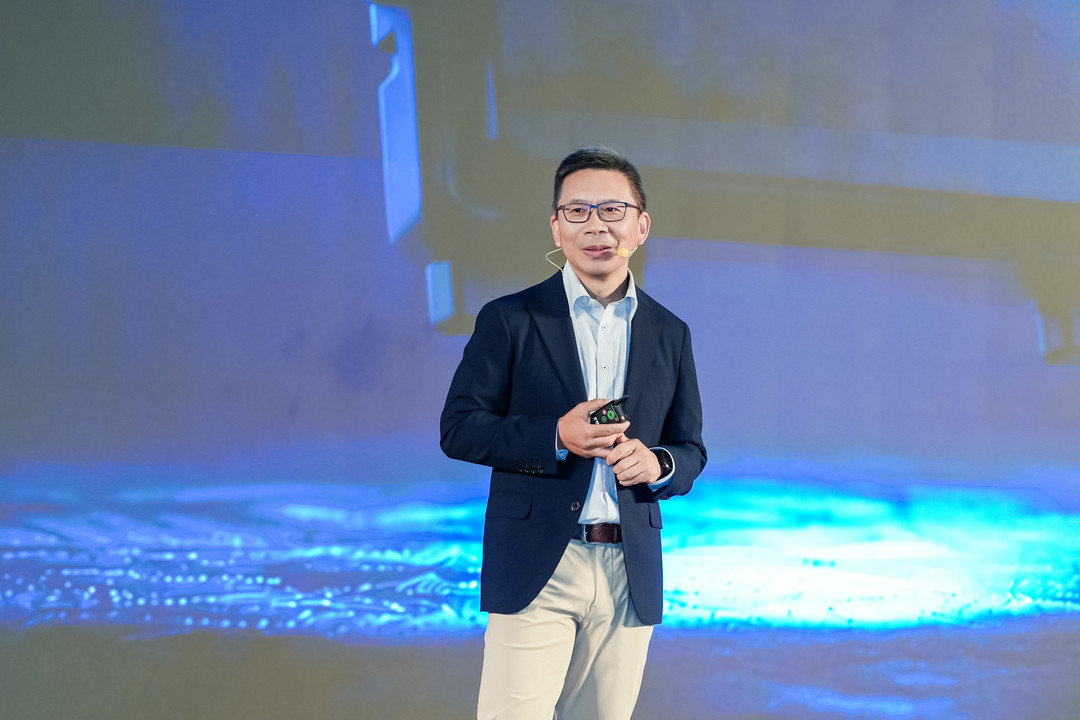
According to Gasgoo, Liao Shaoyao, Tencent's director of smart mobility solutions, made the case on September 15 at a Gasgoo seminar on multimodal large models and embodied perception. He noted that the smart-driving industry reached consensus not through flashy demos or automaker launches, but through weekly software releases and monthly counts of cities where advanced driver assistance is available—a unified yardstick for progress.
For robotics, that "city-opening moment" has not yet arrived, Liao said. While embodied intelligence has moved from trend to irreversible consensus, with robot makers, model developers, chip firms, cloud providers and ecosystem partners all entering the field, a key hurdle remains: data gaps. Physical collection, teleoperation and simulation each have shortcomings, requiring a combination of engineering approaches.
The core fix, he argued, is scaling up devices so data can flow quickly into the next training round, with model improvements feeding back into hardware. To make that loop fast, cloud vendors must supply elastic compute, data-closure tools and model-training platforms.
Cloud tools for robotics
On the collection side, Tencent connects robot bodies to the cloud via SDKs, using nationwide nodes and anti-weak-network capabilities to transmit data. For training, the company offers "tidal" compute—off-peak nighttime capacity—and builds thousand-GPU clusters mixing large and small cards, memory- and compute-intensive types. In simulation, Tencent packages typical Nvidia simulation scenarios as default images that can be launched with one click, accessed via browser, and integrated with machine-learning platforms for training. For deployment, a cloud-edge-device architecture pushes lightweight compute tasks to the edge, cutting latency and network costs.
On the ecosystem side, Tencent's robotics lab offers free toolchains and software to help robot makers quickly validate vertical applications, Liao said.
The presentation did not announce specific products or customers, but underscored Tencent's ambition to become the compute and software backbone for China's robotics push—mirroring the role cloud giants have played in the country's EV and autonomous-driving supply chain.