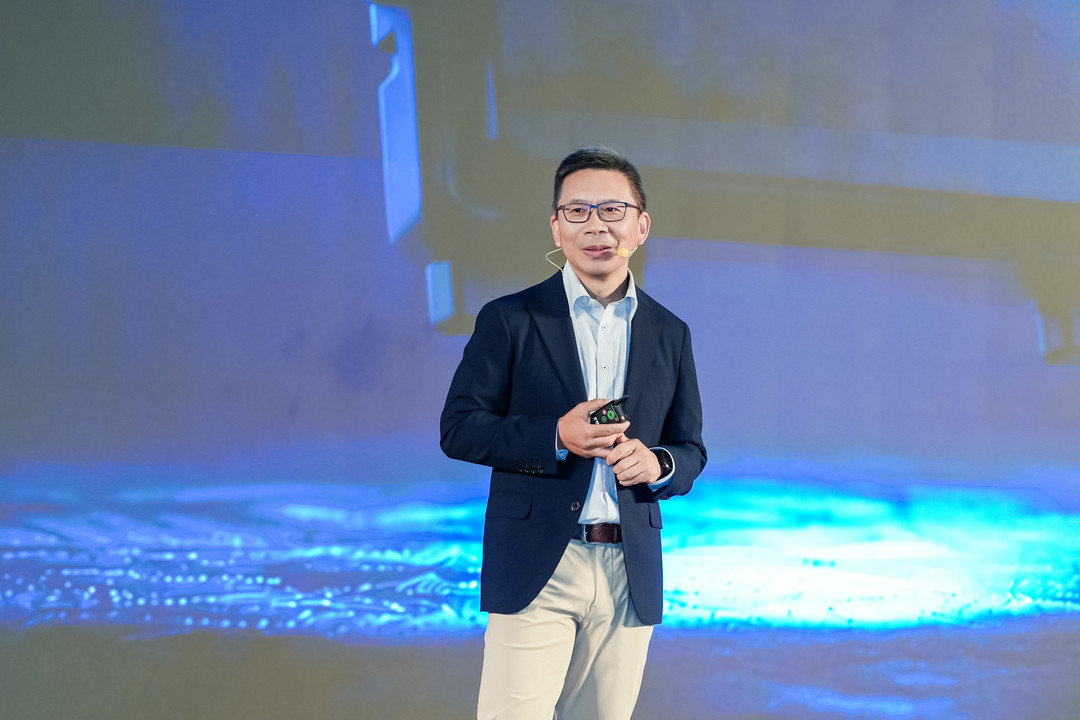
At the 2026 4th AI-Defined Vehicle Forum held on September 17, SONATUS co-founder and Chief Technology Officer Fang Yu said the industry's current focus on AI-defined cars is too narrow. While much attention goes to intelligent driving and human-machine interaction, he argued that a truly AI-native vehicle needs more: applying the same intelligence across the entire lifecycle, from research and development to testing, production, and after-sales service.
Fang Yu pointed out that traditional automotive development processes suffer from fragmented information. Different departments use different software, databases, and workflows, and knowledge is scattered across source code, models, project management tools, historical test records, and vehicle data. This makes it difficult for information to flow smoothly. "On the surface, it's a technology choice, but the root cause is human limitation," he explained. People can only process a limited amount of information in a limited time, making it hard to pass complete knowledge from one team to the next.
AI offers a way to bridge these gaps. By connecting R&D documents, test data, historical records, and vehicle data, AI can understand and relate information across different tools, and help generate problem analyses, test cases, and potential solutions. Fang Yu cited a real application at Nissan Technical Center where combining R&D information with vehicle test data and using AI analysis reduced the time engineers needed to locate a vehicle fault from about two weeks to two days.
This information flow should not be one-way, he added. R&D insights can be passed forward to help testing teams design more targeted test plans, support end-of-line testing in production, and aid after-sales diagnostics. Conversely, common issues found in the field should quickly feed back to R&D.
SONATUS Fastlane: A Continuous Loop
SONATUS's Fastlane product family is built around this concept. It includes Fastlane Collector for vehicle data acquisition, Fastlane Edge for on-board edge computing, and Fastlane Insight, which uses AI agents for cloud-based analysis. The three products can be used independently or combined to form a continuous "observe-analyze-act" loop.
However, Fang Yu stressed that AI does not mean handing all raw vehicle data directly to a large language model. The vehicle must first have flexible data collection and processing capabilities to extract valuable information from the vast raw data before AI analyzes it. In vehicle diagnostics and safety scenarios, AI outputs must also be deterministic and reliable. "In the cockpit, if you ask for restaurant recommendations, different answers are fine. But in vehicle diagnostics, AI must guarantee correct answers," he said.
According to SONATUS, the ultimate value of AI lies in two things: time and risk control. When AI truly connects information across R&D, testing, production, and after-sales, its value extends beyond the in-car experience to development efficiency, quality control, and total lifecycle cost management. Fang Yu's remarks were reported by D1EV, a Chinese electric vehicle news outlet.