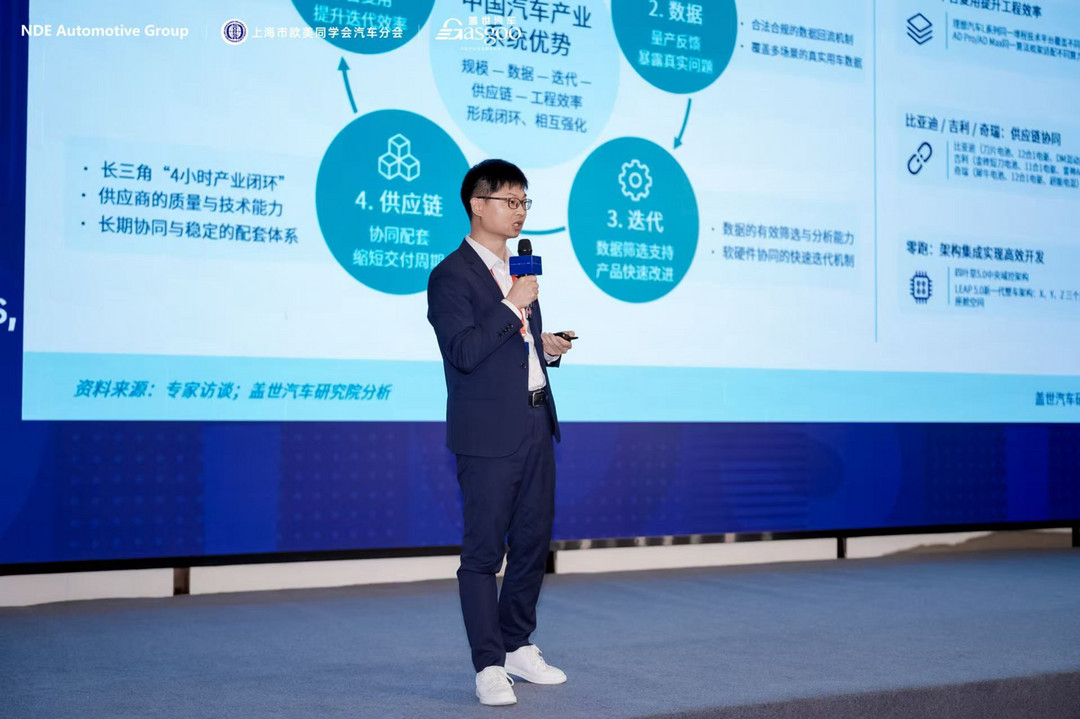
Shanghai-based automaker SAIC Motor sold 1.106 million vehicles overseas in the first nine months of 2025, already exceeding its full-year 2024 total of 1.071 million, according to a speech by the company's innovation chief at an industry forum in Shanghai on October 23.
Cheng Juzheng, SAIC's director of innovation research and development, told the 14th Automotive and Environment Innovation Forum that the company's overseas cumulative deliveries have surpassed 7 million units. In Europe, its MG brand sold about 280,000 vehicles this year, up 23 percent year-on-year, and has now delivered over 1 million units cumulatively, maintaining its position as the best-selling Chinese brand in Europe for 11 consecutive years, according to Gasgoo, which reported the speech.
Cheng argued that the era of easy gains from exporting finished cars is ending. "The dividend from product exports is gradually narrowing," he said, citing tariff pressures, stricter regulations, and rising consumer expectations for financing, after-sales service, charging infrastructure, and software. Automakers must shift from competing on product strength and price to a comprehensive "system" approach covering R&D, manufacturing, supply chain, distribution, and services.
Localization strategy
SAIC is implementing what it calls its "Glocal" overseas 3.0 strategy to deepen local operations. The company has set up vehicle and knock-down (KD) assembly plants in Thailand, Indonesia, India, Pakistan, and Egypt, and established an R&D center in Frankfurt, Germany. Its logistics arm, Anji Logistics, operates a fleet of 42 self-owned roll-on/roll-off (RoRo) vessels, providing annual ocean shipping capacity of 600,000 vehicles.
Cheng cautioned the industry against letting intense domestic competition spill over into overseas markets. He urged a long-term perspective, saying the goal should be to turn "China's solution" into a "global solution."
The remarks come as Chinese automakers face increasing headwinds in key export markets. The European Union has imposed tariffs on Chinese-made electric vehicles, and several markets are tightening local content requirements. SAIC's push for local manufacturing is part of a broader trend among Chinese brands to build factories abroad to mitigate trade barriers and better serve local customers.