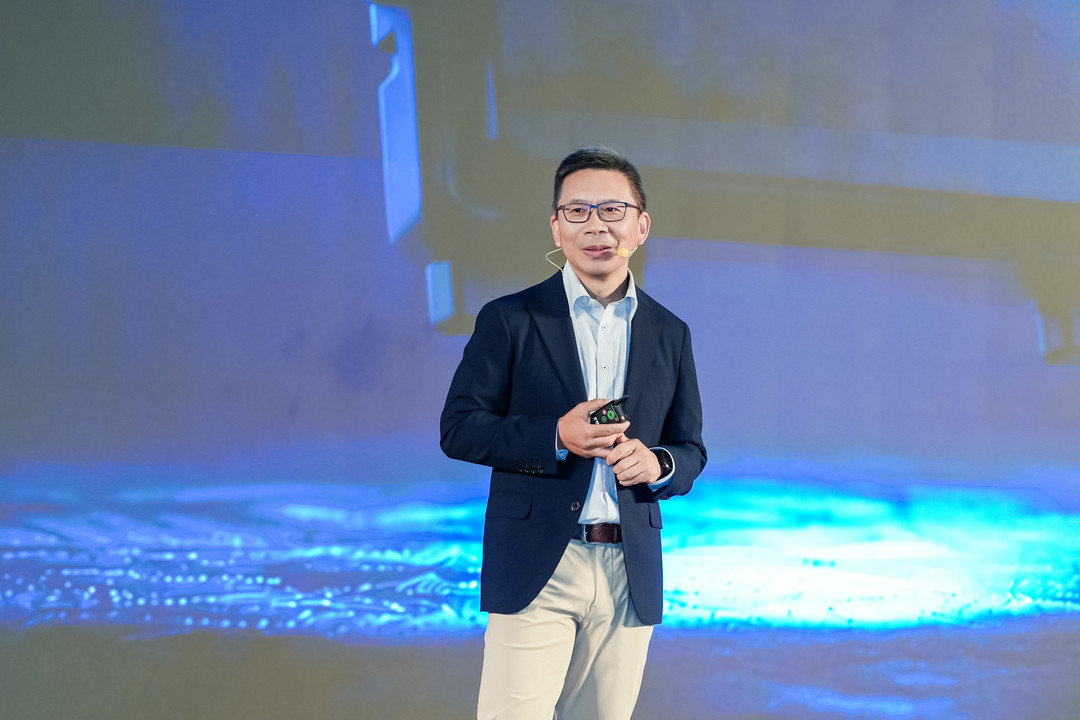
At the 2026 fourth AI Defines Automobile forum on 17 September, Ren Yi, product director at RunXinWei Intelligent Technology, opened with a question he said his wife had asked him: after years of marriage, if you still do not understand me, why should I believe a car can understand me better? He used the anecdote to make a point about the industry's current situation, according to D1EV: AI is already close, but a cockpit that truly understands its user is still far away.
From Tier 1 supplier to AI cockpit provider
RunXinWei, a Chinese Tier 1 supplier traditionally focused on integrated software and hardware, is repositioning itself as an AI cockpit solutions provider. Ren said the key is not how many large language model interfaces a company connects to, but whether AI capabilities can be layered onto an existing mass-production system and turned into something executable, integratable and manufacturable.
The company has built its AI base around three products: Zhixin, a domestic computing platform; Zhiwei, an AI operating system; and Zhirun, an on-device AI model. According to Ren, RunXinWei's smart cockpit products have already passed 1 million units in mass production, and the company has completed adaptation for mainstream domestic chips including Unisoc, Jiefa Technology and Horizon Robotics.
Ren also shared internal data from an AI-assisted software development project. A five-person team working with AI servers completed the engineering work for an Agent OS in two months, with code volume growing from roughly 35,000 lines to 140,000 lines. Test files went from zero to about 150, covering 150 in-car scenarios. He stressed, however, that AI coding is not about letting AI write code freely; it is an engineering system. The company uses different AI tools for development, review and cross-validation, and applies a tiered review mechanism. Changes involving high-risk architecture, customer value or compliance still require a human final review so that responsibility remains traceable.
A 10% cost ceiling
Cost is a central concern for moving AI cockpits into mass production. Ren said high-frequency applications should be handled as much as possible by on-device models, while complex or context-dependent tasks can call on cloud capabilities. He described an internal red line at RunXinWei: the cost increase introduced by AI should be held to no more than 10% of the product's total cost.
AI is also starting to work in the other direction, feeding into the company's own research and development operations. Ren said that in standardised work such as documentation, code commits and test cases, AI has lifted efficiency by 60%, and some non-R&D labour costs have fallen by about 40%.
Ren's broader argument is that agent capability is no longer optional. "AI cockpits must keep Agent capability," he said. "If the current cockpit does not have this capability, it means it has lost the entry ticket for the next round of competition." The goal, he said, is for RunXinWei to help push smart cockpits beyond being functional control systems and towards becoming genuine in-vehicle intelligent systems.