For decades, cars were the pinnacle of mechanical engineering. Now, electrification and software are rewriting that story, and at the very bottom of the chip world, a once-obscure instruction set architecture is suddenly in the spotlight. RISC-V, an open-source, royalty-free chip architecture born at a university, is moving from academic papers to the heart of China's automotive supply chain.
At the 2026 Intelligent Vehicle Chip Ecosystem Conference hosted by Gasgoo, RISC-V dominated the agenda. Executives from Dongfeng, Changan, and SAIC, along with representatives from the world's largest automotive MCU supplier, all discussed the architecture. The message: RISC-V is no longer a niche experiment but a strategic option for automakers seeking control over their silicon destiny.
Why RISC-V matters
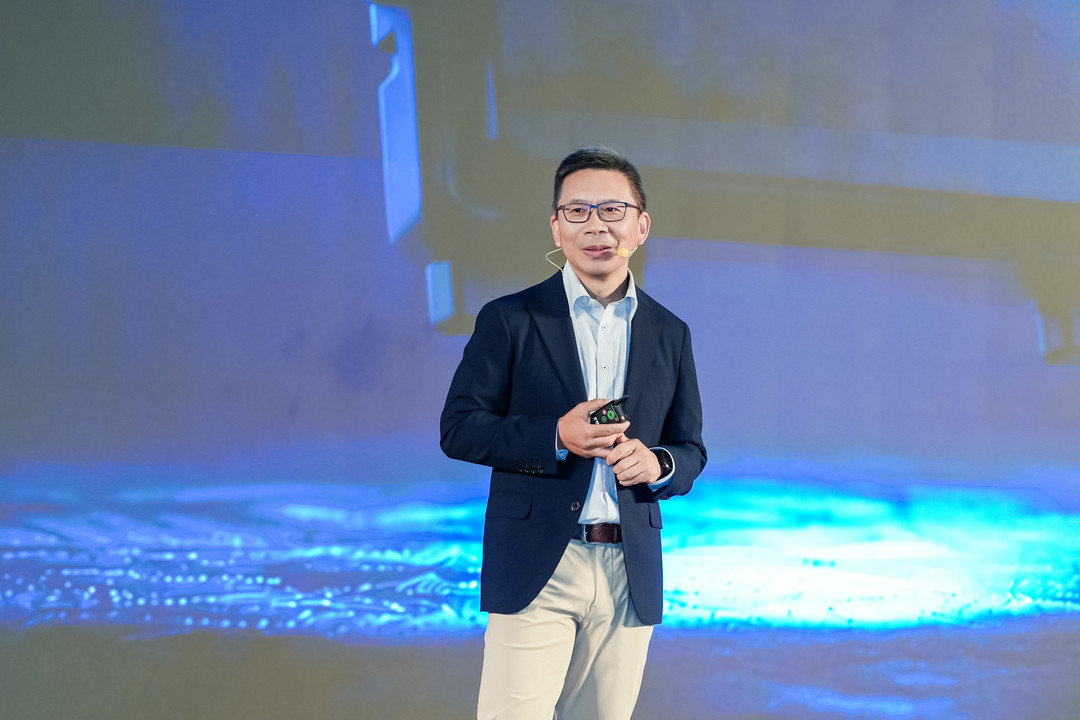
An instruction set is the fundamental language a chip understands. For years, x86 (Intel, AMD) ruled PCs and data centers, while ARM dominated mobile and automotive chips, requiring licenses and fees. RISC-V, created at UC Berkeley in 2010 and now maintained by the neutral RISC-V International, is free to use and modify. As Yan Mingkai, CTO of Zhongqi Xin (Shenzhen) Technology, explained, it offers a simplified, modular architecture that companies can tailor without high licensing costs or supply-chain risks.
The appeal is clear for automakers. High-end automotive MCUs (microcontrollers) have long been dominated by NXP, Infineon, and Renesas, with about 70% market share, according to Qi Ye, a senior manager at SAIC. These proprietary architectures are deeply tied to mature software ecosystems, making switching costly. RISC-V offers a path to break that dependency.
From threat to opportunity
The push for RISC-V in China is partly defensive. Lei Peng, an engineer at Dongfeng, recounted how after sanctions on ZTE and Huawei in 2018-2019, Dongfeng assessed its vulnerabilities. The conclusion was stark: high-end MCUs were a critical gap. "If we were cut off, we couldn't produce a single vehicle," Lei said. This led to the development of DF30, a RISC-V-based MCU co-developed with China Information Communication Technologies Group, using a domestic 40nm process and achieving ASIL-D functional safety. It has been validated in models like the Dongfeng Yipai 007 and is slated for mass production in 2026.
Changan is also exploring RISC-V. Ding Ke, senior deputy chief engineer at Changan, said the company evaluated RISC-V cores in 2022 and found their performance in control scenarios slightly ahead of comparable ARM products. "Our basic requirement for RISC-V is to drive down CPU and GPU prices," Ding said, noting that open architecture allows automakers to embed custom compute for AI and autonomous driving.
Industry giants shift
Infineon, the world's largest automotive semiconductor supplier, is now betting big on RISC-V. Liu Lin, Infineon's RISC-V ecosystem lead for Greater China, said the company will "resolutely" adopt RISC-V as the basis for its next-generation automotive MCUs, covering everything from low-end to high-end. This is a significant shift for a company that previously relied on ARM for mid-to-low-end chips and its proprietary TriCore for high-end powertrain and chassis applications. Infineon's share of the automotive MCU market has grown from 32.1% in 2025 to 36%, according to TechInsights data cited by Liu.
The move is not just about technology but about ecosystem. Infineon has been building toolchains and software, like the DRIVECORE suite, to prepare customers for the transition. As Liu put it, "software before hardware" is a sign of commitment.
Despite the momentum, RISC-V's footprint is still small. Ding Ke noted that while x86 and ARM are billion-dollar markets, RISC-V is only in the low billions. Yet the growth is rapid, and with standards emerging—like the automotive RISC-V working group and the 2026 standard report—the architecture is gaining institutional support. For China's EV industry, RISC-V represents a rare chance to reshape the chip supply chain on its own terms.