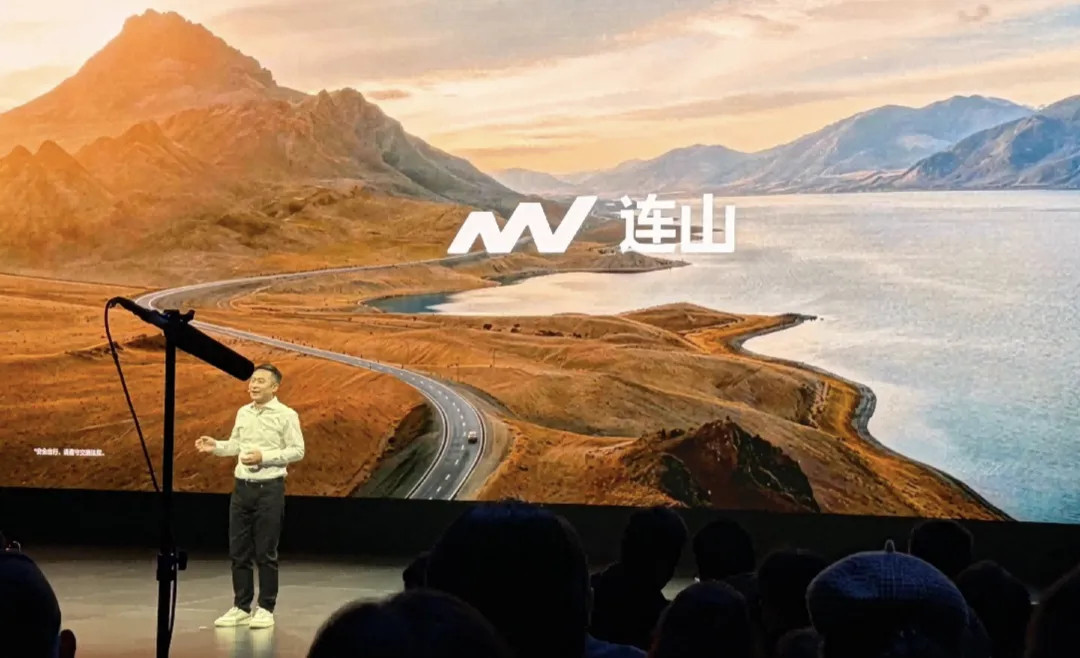
Li Auto has laid out its full-stack electric vehicle technology strategy at a dedicated Power Day event, unveiling the Lianshan system that spans battery cells, e-drives, and ultra-fast charging infrastructure. The presentation, reported by NetEase Auto, detailed how the company plans to integrate core technologies to improve safety, performance, and user experience.
Battery strategy: self-developed pack, outsourced cells
Contrary to expectations, Li Auto is not building its own cell factories. Instead, it will design and manufacture battery packs in-house while outsourcing cell production to partners like Sunwoda and CALB. To secure supply, Li Auto invested 2.65 billion yuan (about $373 million) in Sunwoda in 2026, becoming its second-largest shareholder. The company also established a wholly-owned subsidiary in Zaozhuang, Shandong. President Ma Donghui emphasized that the key is data access: "It doesn't matter who makes the cells, as long as we can access the data from materials to the vehicle."
The company's 5C ultra-fast charging battery, developed since 2020, uses high-entropy doping in the cathode, gradient porosity electrodes in the anode, and a dual-formula electrolyte to reduce heat generation. Compared with typical 2C cells, the 5C cells run 12°C cooler during fast charging, according to Li Auto. The company claims a 10-minute charge can add 500 km (311 miles) of range, a figure based on the CLTC cycle, which is roughly 15-20% more optimistic than WLTP (est. 400-425 km).
Lifetime warranty and winter performance
Li Auto introduced a lifetime warranty for battery-related fire incidents. If a battery defect causes a fire that totals the vehicle, Li Auto will replace it with a new car of equivalent configuration. For fires caused by collisions or underbody scrapes that lead to a total loss, the company will cover the gap between the insurance payout and the vehicle's insured value. The warranty applies to first owners of non-commercial vehicles that follow official maintenance schedules and maintain comprehensive insurance.
For cold climates, Li Auto developed an adaptive power control algorithm that adjusts battery output 10 times per second, boosting peak power by over 40% in winter. The thermal management system recovers waste heat from charging to warm the cabin, adding 30 km (19 miles) of winter range. For LFP batteries, a dedicated algorithm keeps state-of-charge estimation error below 3%, eliminating the need for weekly full charges. Future over-the-air updates will add about 10 km (6 miles) of range at -20°C.
The company also addressed battery degradation concerns. By combining material improvements, low internal resistance (0.254 milliohm), and smart thermal sensing, Li Auto targets a design life of 8 years or 160,000 km (99,419 miles) with battery health above 75% for its 2026 self-developed 5C models.
E-drive and charging network
Li Auto's new e-drive platform, developed since 2021, includes a self-developed cast aluminum rotor material (CAR119) that improves auxiliary motor efficiency, adding 15 km (9 miles) of urban EV range and 8 km (5 miles) of highway range to the new L9 and L8. A distributed terminal-free connection technology shortens the current path to 3 mm from the chip, adding another 30 km (19 miles) of range and freeing 24 mm of vertical space. The company's self-developed silicon carbide power chips have shipped 4 million units over the past year with zero failures, and the Li i8's powertrain was featured on the cover of Germany's MTZ magazine, a first for a Chinese e-drive system.
Li Auto has built 4,200 ultra-fast charging stations with over 23,000 chargers, covering 25 national highway routes. Over 95% of highway stations are inside service areas, and 99.8% offer free parking during charging. The company plans to increase its 5C charger count to 8,300 by the 2027 Spring Festival and is exploring fully automated charging that requires no manual plug-in.