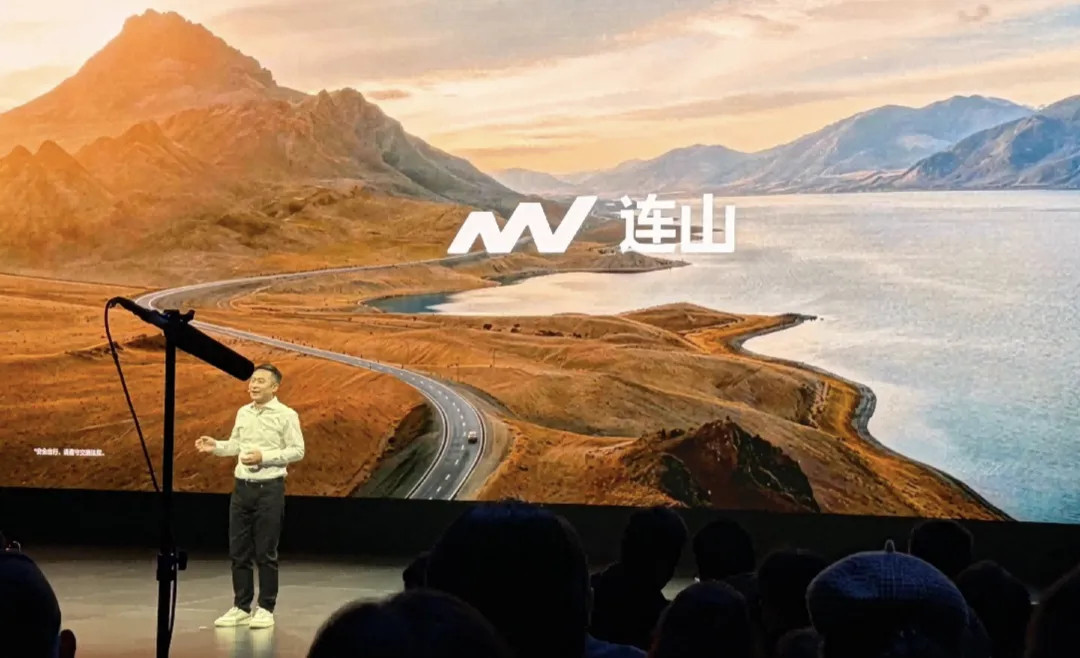
At its Power Day event on October 20, Li Auto unveiled its Lianshan electric vehicle technology platform, a comprehensive system spanning battery cells, electric drive units, ultra-fast charging infrastructure, and cloud-based safety monitoring. The Chinese automaker, known primarily for its extended-range electric vehicles (EREVs, which combine a battery with a small gasoline engine as a generator), is positioning Lianshan as its answer to the persistent concerns of EV buyers: winter range loss, battery degradation from frequent fast charging, and holiday highway charging queues.
The centerpiece of Lianshan is a 5C ultra-fast charging battery, meaning it can charge at five times its capacity rate. Li Auto says it redesigned the battery's negative electrode from a single-channel structure to a multi-directional network and used gradient porosity electrode technology to create a structure that is loose on the outside and dense on the inside. This allows lithium ions to flow freely at high currents while maintaining energy storage density. For its lithium iron phosphate (LFP) cells, the company claims a 2.6% energy density improvement over standard 2C cells through high-pressure compaction of the positive electrode.
Battery and range improvements
Battery pack redesigns add up to significant gains: removing the long longitudinal beam in favor of a '日'-shaped frame adds 3.2 kWh, integrating the cooling tube with the expansion beam saves 1.6 kWh, and using an integrated circuit board for the power distribution unit adds another 0.8 kWh. These changes help the new Li L8 achieve a 430 km range, while the 2026 i6 two-wheel-drive version reaches 780 km, an 8% improvement over the previous model.
To address LFP's notoriously inaccurate state-of-charge readings, Li Auto developed an adaptive trajectory reconstruction algorithm that estimates battery level within 3% error, validated on a fleet that has driven 4 billion km. For cold weather, a power adaptive algorithm makes millivolt-level voltage predictions, adjusting output 10 times per second, boosting winter peak power delivery by over 40% and extracting 5% more usable energy. A heat pump recovers waste heat from charging to warm the cabin, adding 30 km of winter range, with another 10 km promised via an over-the-air update in the first half of 2027.
On battery longevity, Li Auto claims its Lianshan cells are designed for 8 years or 160,000 km while retaining over 75% health. The company offers a warranty that replaces the vehicle if a self-developed battery catches fire due to manufacturing defects, and covers the gap between insurance payout and actual value for fire damage from collisions or underbody impacts.
Electric drive and charging network
Li Auto's electric drive efforts include a CAR119 cast aluminum rotor that improves power density by 20% over industry average, adding 15 km of city range and 8 km of highway range to the L9 and L8. The company says it has licensed CAR119 for external use. A distributed terminal-free direct connection design, which took four years and over 10,000 samples to develop, adds 30 km of range and frees up 24 mm of vertical space. According to Li Auto, its electric drive systems have achieved zero failures across 4 million chips in one year of mass production.
On charging infrastructure, Li Auto says it is the only Chinese automaker to build its network before selling its first pure electric vehicles. Since April 2023, it has deployed 4,200 ultra-fast charging stations with 23,000 chargers, totaling over 2 GW of capacity. The network covers 25 national highways, with 95% of highway stations located in service areas. Average charging time for Li Auto i9 owners during the 2026 National Day holiday was 12 minutes, compared to 22 minutes for other brands' vehicles, according to the company.
Li Auto plans to double its 5C chargers to 8,300 units before the 2027 Spring Festival and is expanding to scenic routes including the G219, G331, and G228 border highways. The company also says fully automated parking and charging stations are now operational, allowing drivers to charge without leaving the vehicle.