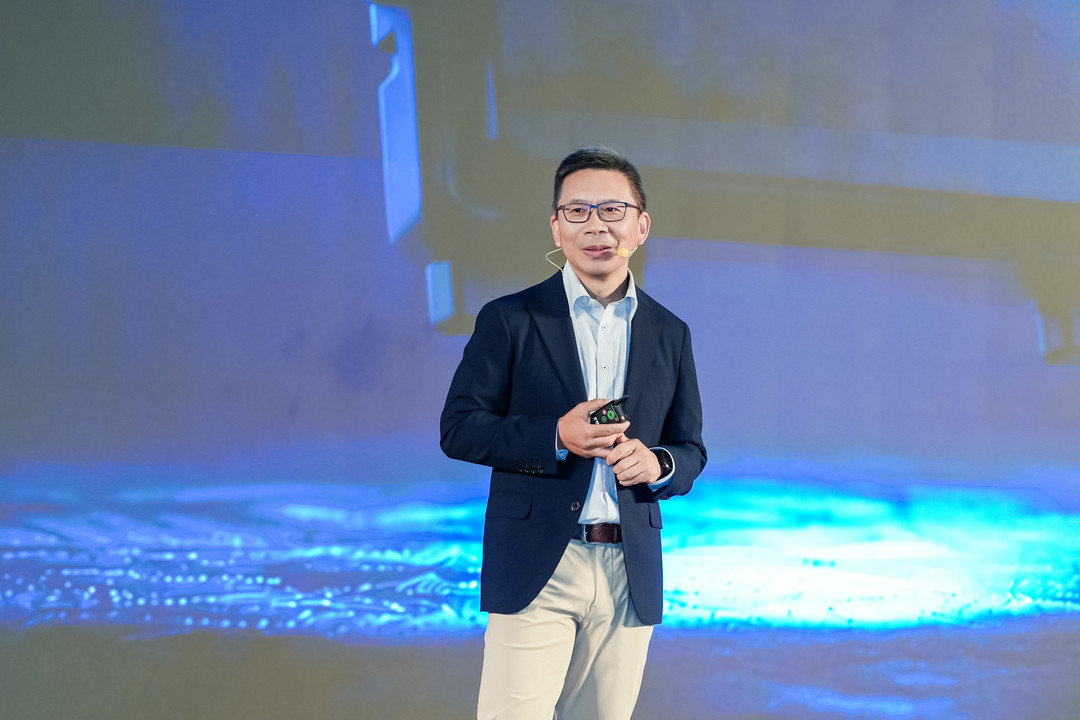
At the 2026 Aggregated Intelligence Industry Development Conference, Yu Fei, robotics technology general manager at Kingfa Science & Technology, offered a sobering counterpoint to the capital-fueled excitement around embodied AI. A humanoid robot weighs about 70 kilograms, he noted, and a half-marathon would require dry-ice cooling. Of nearly 400 robot companies in China, only a handful produce more than 1,000 units a year.
Kingfa, a major Chinese plastics maker, is attacking the weight problem head-on. “Our main goal is lightweighting, replacing steel with plastic, and transferring mature experience from eight traditional industries to humanoid robots,” Yu said, according to PCauto. The density of aluminum is 2.7 and magnesium 1.8, while glass- or carbon-fiber-reinforced modified plastics can reach 1.3 — cutting weight by up to 50% versus aluminum alloy. “Lightweighting is an inevitable trend; range must be extended through lightweighting,” he added.
But the shift is not as simple as swapping metal parts for plastic ones. Yu stressed that product structure must be redesigned alongside the material change. “In the early days, car bumpers were metal. Pushing back to the humanoid robot stage, industry experience is generally lacking, and it will take 3 to 5 years of exploration to land,” he said. Kingfa's approach is phased: first the upper body — masks, upper arms, chest — then, once that is lighter, the lower body's load-bearing thigh components. “Globally, no one has truly achieved plastic-for-steel in lower-body structural parts like the thigh,” Yu admitted.
Beyond weight, heat dissipation is a pain point. Kingfa's thermal conductivity solutions can reach 15, and combined with structural design, can solve most cooling issues, Yu said. The company has also shifted from selling plastic pellets to offering full solutions — material selection, product design, mold proposals, and back-end molding. A global analysis team of nearly 100 people, including two Model Flow gold experts, works with automakers and Tier 1 suppliers to define early-stage specifications. “Automakers are willing, Tier 1s are willing; as long as they use our materials, we're happy to provide this service. The three-way bond is very strong,” he said.
PEEK: 'Mostly hype'
PEEK, sometimes called “plastic gold,” sells for about 1,000 yuan per kilogram (about $141) and offers self-extinguishing, wear-resistant, and strong properties. But Yu is blunt: “In current embodied intelligence applications, most PEEK use — not all, but most — is hype.” PEEK's dimensional differences from metal and fatigue strength about two orders of magnitude lower make large-scale metal replacement “very difficult” in the short term. Kingfa, which has 1,500 tonnes of annual PEEK capacity and is a domestic leader, would rather recommend more cost-effective options if adding cost without significant benefit. “PEEK is in a dilemma in current application scenarios,” Yu said, unless future structural changes make it viable.
Yu also framed “domestic substitution” as “cost-performance optimization” rather than “rigid replacement.” Chinese materials are competitive in integration, and lower prices don't mean worse reliability — foreign materials were previously high-margin, and Chinese competition has driven prices down. He compared it to car buying: “Young people today don't demand ABB (Audi, BMW, Benz); domestic NEVs are also very good. The rise of national brands is breaking this psychological barrier.”
Car supply chain transfer: methodology, not materials
Yu, who spent a decade at Kingfa on automotive materials before moving to robotics late last year, is well-placed to assess the “direct transfer” of the car supply chain. Material overlap is only 20–30% — cars use general engineering plastics like PA6 and PA66, while robots need PEEK, PPS, LCP, and high-temperature nylon. Operating conditions differ too: cars run at low frequency, robots at high frequency, with different strength, drop, and thermal requirements. “This 'reuse' is not simple copying; it requires a two-way effort of material performance improvement and product structure optimization,” he said.
However, supply chain capability and methodology overlap is high. “Over 90% of automakers are already laying out embodied intelligence,” Yu said, and some Tier 1s have pivoted entirely, even abandoning cars. The century-old automotive playbook of “structure analysis—mold proposals—three-party collaboration” transfers, but materials don't. Directly applying automotive standards is like “killing a chicken with a cleaver — use it first, then optimize,” he said, a low-risk but potentially costly path most companies take.
For now, robot material solutions are highly customized — 80% to 90% are bespoke, making cross-customer reuse difficult. Even in the century-old auto industry, material standards vary widely between Japanese, European, and domestic brands, Yu noted. “In the new robot track, unified reuse is hard; each company wants customization, and the front-end design wasn't unified, so the back-end can only follow.”
Industry forecasts suggest 2026 is the “mass production year,” with domestic humanoid shipments around 100,000 units this year and 200,000–300,000 next year, with 2028–2030 as the explosion window. Global shipments were 17,000 last year, 85% from China, and first-half installations this year doubled or tripled year-on-year. Each robot uses 6–10 kg of plastic, costing over 1,000 yuan in material. Cost reduction depends on scale: as volume grows, processing shifts from CNC to injection molding and molds, lowering supply chain and material costs, creating a positive cycle.
Kingfa has designated robotics as its “ninth industry” after eight traditional ones, and is expanding capacity: 20,000 tonnes of high-temperature nylon PPA, 11,000 tonnes of LCP, 6,000 tonnes of polysulfone, and 1,500 tonnes of PEEK. It's also recruiting PhDs and following the automotive path overseas — Kingfa globalized in 2012 by acquiring a listed Indian company and now has operations in Southeast Asia, Poland, and Mexico. “We'll go out with the automakers, just like in cars,” Yu said. The company is also engaging standards bodies to help define industry standards, which are currently blank — an opportunity for material makers. “This is not a slogan, but a road that will take 3 to 5 years or more to walk. This skeleton revolution has just passed the starting line,” he said.