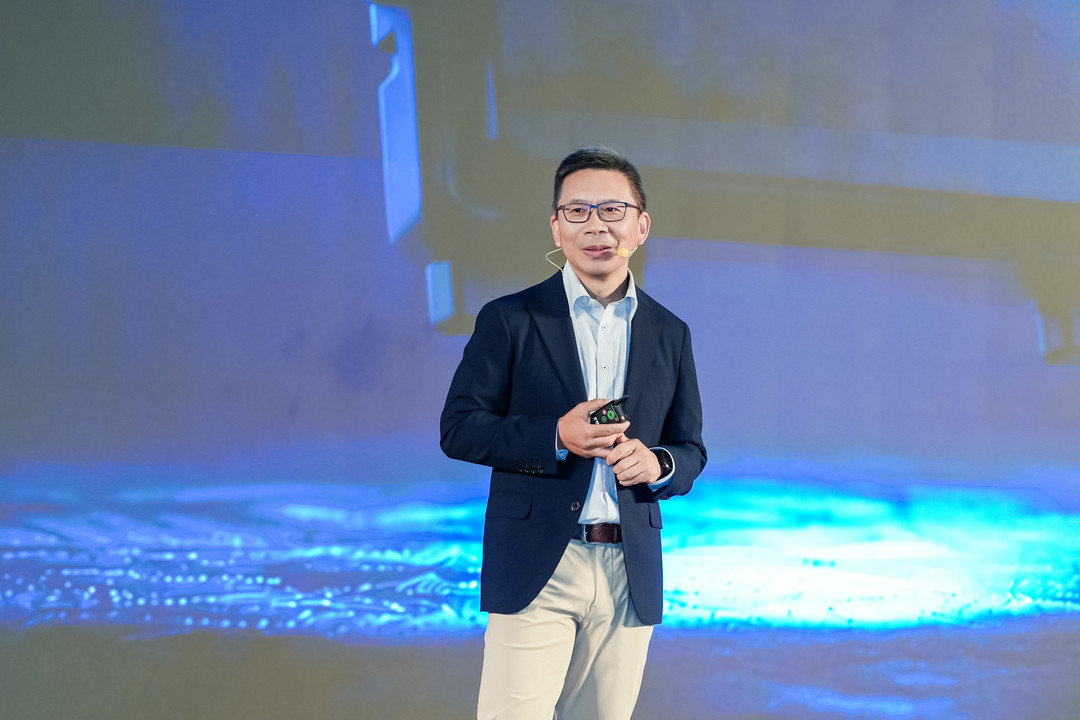
At the 2026 Aggregated Intelligence Industry Conference, Yu Fei, general manager of Kingfa Technology's robotics materials division, laid out the industry's challenge: a humanoid robot weighs about 70 kilograms, and under half-marathon conditions it needs dry-ice cooling. Among nearly 400 domestic companies, only a few can produce more than 1,000 units a year. Kingfa's answer, he said, is lightweighting—replacing steel with plastics and transferring mature experience from eight traditional industries to humanoid robotics.
Lightweighting is driven by physical limits on battery life and payload. Yu cited comparative densities: aluminum is 2.7, magnesium 1.74, while glass-fiber or carbon-fiber reinforced modified plastics can reach 1.3, cutting weight by up to 50% versus aluminum alloy. But swapping metal for plastic is not a simple parts replacement. The product's structural design must be reworked from the ground up, Yu stressed. He likened it to early automotive bumpers, which were metal before plastic took over. For humanoid robots, the industry lacks accumulated experience, and he estimates 3 to 5 more years of technical exploration are needed.
Kingfa is proceeding in stages: first lightweighting the upper body—face masks, upper arms, chest—where plastic-for-steel solutions are mature; then tackling load-bearing structures in the lower body, where no company has yet achieved large-scale plastic substitution, according to Yu.
Beyond weight, heat dissipation is a hurdle. Kingfa's materials can reach a thermal conductivity of 15 W/(m·K), and combined with structural design, can solve most cooling problems, Yu said. The company, a global new-materials platform, offers a full package from material selection to molding, with a simulation team of nearly 100 people, including two Model Flow gold experts, collaborating with OEMs and Tier 1 suppliers in early product definition. "OEMs and Tier 1 suppliers all recognize this model," Yu said. "If they choose Kingfa materials, we provide these technical services, creating strong synergy."
PEEK: experimental for now
PEEK, sometimes called "plastic gold," costs about 1,000 yuan per kilogram (roughly $141) and offers self-extinguishing, wear-resistant, high-strength properties, leading some to see it as a metal replacement. But Yu is cautious: in embodied intelligence today, PEEK applications are mainly trial verification, far from large-scale practical use. The dimensional differences and fatigue strength gaps between PEEK and metal are significant, so short-term mass replacement is unlikely. If cost changes don't bring clear performance gains, Kingfa will recommend more cost-effective alternatives based on customer conditions and production goals.
Still, Kingfa continues investing in PEEK development. Yu predicts that if humanoid robot structures undergo major redesign and operating conditions align with material properties, PEEK could see a window for mass adoption. He also noted that domestic materials are becoming competitive in integration, and price doesn't equal poor reliability. As Chinese mid-to-high-end materials enter production, market competition is bringing prices to reasonable levels, he said, adding that younger car buyers no longer insist on traditional luxury brands—domestic new-energy vehicles are good enough, and the rise of domestic goods is breaking psychological barriers.
Car industry experience: useful but not directly transferable
Some in the industry try to reuse automotive supply-chain solutions for humanoid robots. Yu, who spent a decade on automotive materials at Kingfa before moving to robotics last year, sees only 20-30% overlap in material types. Cars mostly use general engineering plastics like nylon 6 and 66; robots prefer PPA, PPS, LCP, and PEEK. The deeper difference is operating conditions: cars run at low frequency, robots at high frequency, with different demands on strength, impact resistance, and thermal conductivity.
Yu said material development must balance multiple performance requirements, and "reuse" is not simple copying but a two-way effort of improving materials and optimizing structures. Supply-chain capabilities and methodologies are highly similar, though. Over 90% of automotive OEMs are already positioning in embodied intelligence, and Tier 1 suppliers are transforming, some entirely. The century-old automotive methodology of structural analysis, mold design, and tripartite collaboration can be transferred, but not the material solutions directly. As for applying automotive standards directly, Yu said it's feasible to start with them and then optimize, with manageable risk but possibly higher costs.
The robotics materials supply chain is highly customized—80% to 90% of humanoid robot material solutions are bespoke, making cross-customer reuse difficult. Even in the century-old auto industry, material standards differ among Japanese, European, American, and Chinese brands, Yu noted. From prototyping to mass production, material and structural designs often iterate three to five times before finalization.
Industry experts predict 2026 will be the "first year of mass production," with domestic humanoid shipments possibly around 100,000 units this year and 200,000-300,000 next year, with a potential boom between 2028 and 2030. Last year, global humanoid shipments were 17,000 units, with China accounting for 85%, and first-half installations this year doubled or tripled year-on-year. Despite rapid growth, the volume is small, and robotics revenue currently contributes minimally to Kingfa's total.
Cost reduction will come from scale: as production grows, processing shifts from CNC to injection molding and mold making, lowering supply-chain and material costs, creating a positive cycle. Kingfa is preparing capacity for robotics as its "ninth industry," with 21,000 tonnes of high-temperature nylon PPA, 11,000 tonnes of LCP, and 6,600 tonnes of polysulfone, and plans to expand robotics-related lines. The company also participates in setting industry standards, which are currently lacking, presenting an opportunity for material makers to help define them.
Yu's message is straightforward: "Our main job is lightweighting, replacing steel with plastic, and transferring mature experience from eight industries to humanoid robotics." That path, he acknowledges, will take 3 to 5 years or more. The "bone revolution" has just passed the starting line, according to PCauto's report.