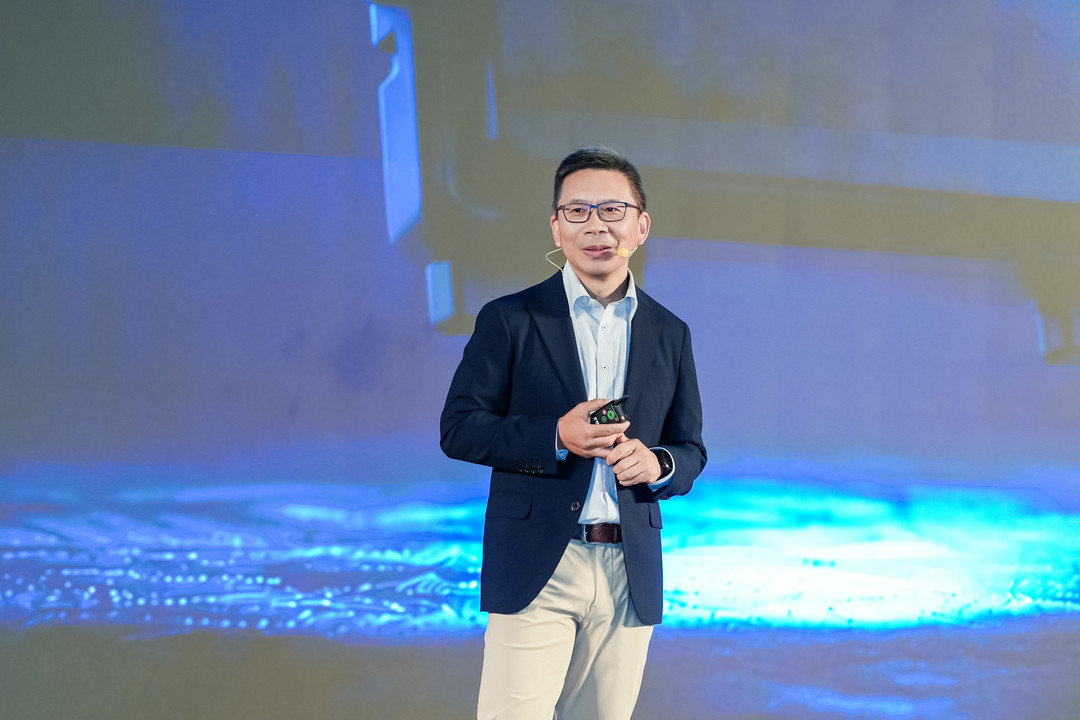
At the 22nd China Automotive Industry Development (Teda) International Forum on September 19, Wang Chao, vice president of Huawei Digital Power and president of its intelligent electric powertrain product line, outlined a strategy to break the industry's homogeneity through bottom-up innovation in the vehicle motion domain, according to Gasgoo.
From single-motor to motion-domain intelligence
Wang described a three-stage evolution: Stage 1.0 builds distributed experiences based on instinctive safety and super components; Stage 2.0 adds redundant safety and near-end closed-loop capabilities, using second-generation super components to form super systems with predictive algorithms; Stage 3.0 explores full-domain safety, connecting in real time with the intelligent driving and cockpit domains, and using scenario libraries for granular control to achieve optimal motion-domain experiences across all scenarios. The core goal, he said, is to move from "single-motor intelligence" to "motion-domain intelligence," achieving "the car follows the person, the car follows intelligent driving."
Wang noted that Huawei's Zhiqing (Smart Drive) division has been the top independent Tier 1 supplier in 2024 and 2025, with over 30% shipment share in vehicles priced above 300,000 yuan (about $42,300). By the end of this year, cumulative shipments are expected to exceed 3 million units.
Efficiency gains and industry calls
On energy efficiency, Wang said the industry has moved from Stage 1.0 (adding batteries to add range) and Stage 2.0 (improving motor efficiency) to Stage 3.0 (systematic energy efficiency). In 2025, the industry achieved 10 kilometers per kilowatt-hour; Huawei achieved this in 2024, reached 12 km/kWh in 2025, will mass-produce BEVs (battery-electric vehicles) with 12 km/kWh in 2026, and will explore 14 km/kWh by 2027.
Wang concluded with three appeals: promote cross-OEM platform standardization to build million-unit-scale component platforms; integrate the intelligent driving, cockpit, and motion domains using a "common protocol plus private protocol" approach to reduce adaptation costs while preserving differentiation; and unify high- and low-voltage wiring harness interface standards to reduce mold development waste.
"We hope to do difficult but correct things, and be together with China's auto industry—there is tomorrow, there is a future," Wang said.