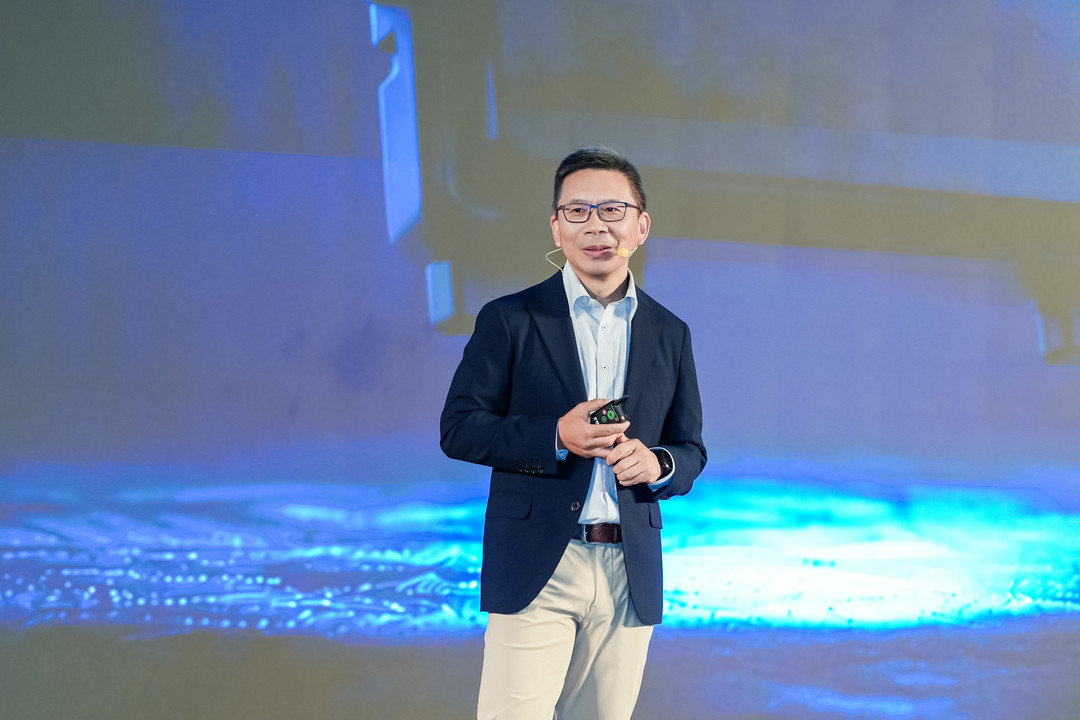
At the 2026 World Intelligent Connected Vehicles Conference (WICV) held in Beijing on October 21, Horizon Robotics founder and CEO Yu Kai poured cold water on the industry's smart-driving hype, saying today's urban NOA (city advanced driver assistance) is merely "usable" — far from "good to use" or "loved to use," according to PCauto.
MPCI: the metric that matters
Yu introduced a hard metric — MPCI, or miles per critical intervention, which measures the average distance a vehicle can drive before a safety takeover is needed. He said the industry's top level has just crossed the threshold of one safety takeover per 100 kilometres. In practice, that means a user taking a 30-minute test drive in a city would rarely encounter an intervention, giving the impression that urban NOA has arrived.
But whether the system is truly good to use requires driving 1,000 kilometres to find out. Yu noted that Tesla's current urban MPCI is around 1,000 kilometres, with highway scenarios somewhat longer. "That's already impressive, but to reach Robotaxi and L4/L5, MPCI needs to climb above 100,000 kilometres," he said.
Yu called 2026 a turning point. Urban NOA, once a feature reserved for luxury cars, is now becoming standard equipment on entry-level models priced around 100,000 yuan (about $14,100). He welcomed this democratisation — buyers are willing to use it, and automakers are confident enough to install it. But he cautioned that the "second half" of smart driving is not a sprint but an expedition. "Every 10-fold leap in MPCI is like crossing the Pacific. From 100 kilometres to 1,000, to 10,000, to 100,000, we may still need to cross several Pacifics."
A Tier 2 stance, not a Tier 1 ambition
Yu expressed doubt that simply scaling data and training models will keep pushing MPCI along the same linear curve from 100 to 1,000 kilometres. "Whether it can continue along the same line toward 10,000 and 100,000 kilometres — I'm not so sure," he said, urging both optimism and a recognition of the difficulty.
Shifting to the supply chain, Yu argued that automobiles are complex systems where innovation emerges from collaboration, not top-down planning. "Horizon has never wanted to build cars; we focus on compute chips and the base software inside them," he said. He positioned Horizon not as a Tier 1 supplier but as a typical Tier 2 — with 95% of its vehicle projects delivered through partners. He explained that Nvidia's moat is not just GPU hardware but the CUDA software ecosystem, and a chip company that ignores software toolchains and base software cannot truly empower its customers. Horizon's approach is to perfect its "compute plus base software" layer and let Bosch, Continental, automakers and solution providers handle assembly, delivery and end-user services.
Yu cited a concrete example: Horizon's collaboration with Germany's Bosch won a project with Japan's Suzuki, bringing together a Chinese tech company, a German parts giant, a Japanese car brand and millions of users in the Indian market. He said this is what the intelligent vehicle era should look like — not disrupting existing cooperation networks or grabbing Tier 1 and automaker roles, but acting as a "value creator" and "ecosystem enabler."
"Chinese tech companies have R&D advantages and young talent. But the more we have, the more we should respect the supply chain," Yu said. When every player does its own job thoroughly, innovation actually speeds up. His message to the industry was sober: don't treat "installing it as revolution," and don't retreat because it's hard. After 100 kilometres comes 1,000, and after that 100,000 — each Pacific crossing depends not on one dominant player but on whole-chain collaboration.