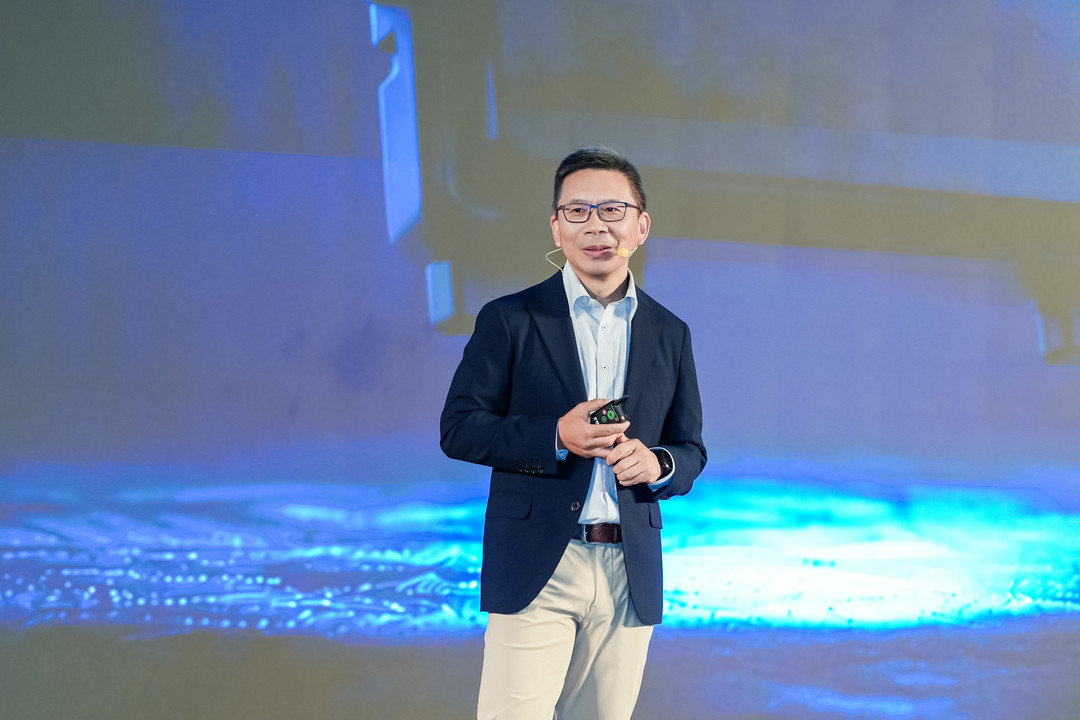
Chinese lidar maker Hesai unveiled its new MT-series at the InterGEO 2026 trade fair in Munich on September 15, positioning the product for high-precision 3D mapping applications, according to Gasgoo, a Chinese automotive news outlet.
The MT series is built for ultra-high spatial resolution, aiming to support detailed three-dimensional reconstruction of buildings, infrastructure and industrial facilities. Hesai said the sensor's physical footprint has been cut sharply: the body measures about 6cm in diameter and weighs 300g, a 40% reduction in both volume and weight compared with the previous generation.
Performance gains
On the performance side, the spot area is 70% smaller than before, and ranging accuracy has improved 30% to 3.5mm. The sensor uses what Hesai calls infinite uniform densification scanning technology and offers a field of view up to 320° by 60°, with vertical coverage expanded to 1.5 times that of the prior model.
The MT series has already been integrated into NavVis's new VLX 4 mobile scanning system, which can natively achieve 3mm point-cloud resolution during mobile capture. Typical use cases include architectural and infrastructure modelling, surveying of mechanical and electrical piping, and digitisation of industrial sites, Hesai said.
According to on-site statistics from InterGEO 2026, Hesai's lidar holds a market share of more than 70% in surveying and mapping applications. The company said its high-precision lidar products have been sold to over 270 industry customers in more than 20 countries worldwide.
Hesai's move reflects a broader push by Chinese sensor makers into specialised industrial applications beyond automotive advanced driver assistance, where lidar is also used for urban NOA (city-level assisted driving) systems in BEVs (battery-electric vehicles).