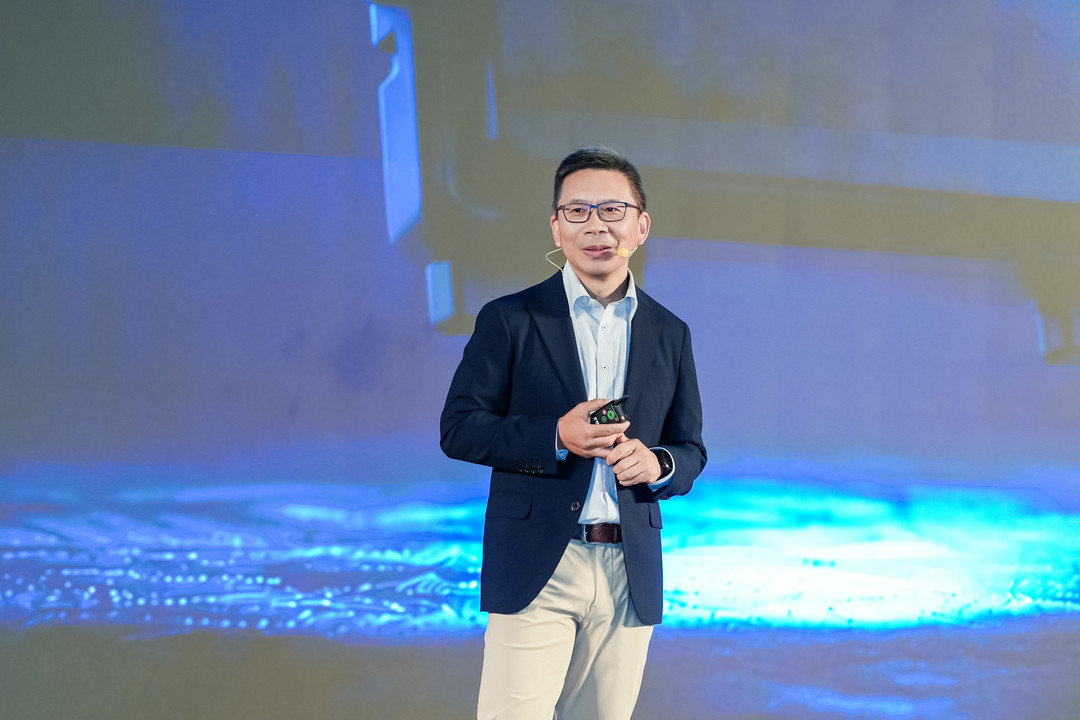
At the 2026 AI-Defined Auto Forum held on September 17, Liu Zhifeng, a senior engineer at Dongfeng's R&D institute specializing in vehicle-road-cloud integration, argued that the era of relying solely on in-car intelligence is ending. He said that as L2 driver assistance becomes widespread and L3 systems begin to enter the market, the smart connected vehicle industry must shift from pure technology innovation to a dual focus on technology and institutional innovation. According to Liu, competition in intelligent mobility will move from single-vehicle feature leadership to system trustworthiness and a restructuring of industry boundaries.
Liu, speaking at the forum organized by Chinese outlet D1EV, outlined a tiered approach for future development, noting that different scenarios have varying technical difficulty, safety demands, and commercial maturity. He predicted that closed parks, mines, and long-haul logistics would be the first to achieve breakthroughs, as these environments offer controlled conditions and clearer business cases.
Dongfeng's technology stack
Dongfeng's technical foundation is built around its 'Tianyuan Intelligence' system, which comprises a 'one core, two bases, two elements' architecture. The core is an enterprise-level Taiji large model, while the two bases are the Tianyuan electronic-electrical architecture and the Tianyuan OS. The two elements refer to Tianyuan autonomous driving and Tianyuan smart cockpit. Dongfeng has previously stated that this architecture enables deep integration across powertrain, body, cockpit, and driving domains.
Liu revealed that in cockpit-driving integration, Dongfeng has achieved cross-domain communication latency of 1 millisecond, intelligent agent cross-domain scheduling response of about 300 milliseconds, and a success rate of over 92% for cross-domain collaborative tasks. This integration reduces component count by 15% to 30% and overall costs by more than 15%, he said.
Vehicle-road-cloud in practice
Liu devoted much of his talk to vehicle-road-cloud integration, where vehicles communicate with roadside infrastructure and cloud platforms. Dongfeng has been running demonstration and operation projects in Wuhan, Shiyan, Xiangyang, and Beijing's Yizhuang area, and is involved in a Beijing-Tianjin-Hebei highway vehicle-road-cloud collaboration project. In Shiyan, over 230 manned vehicles and 15 driverless logistics vehicles are in regular operation, and Liu said vehicle-road-cloud coordination improves overall operational efficiency by more than 20% compared with single-vehicle intelligence.
On the Rongwu Expressway in Hebei, Hebei Communications Investment Group and Dongfeng are jointly exploring two-way data flow between vehicles and highways. Liu highlighted a shift in the vehicle's role: cars will not only receive data from roads and cloud systems but also provide data services to highways, municipal infrastructure, inspection, and safety management. This moves from one-way data acquisition to two-way empowerment between vehicles and infrastructure.
Liu concluded that the next stage of intelligent vehicle evolution will be determined not just by computing power and models, but by standards, data circulation, and operational closed loops. The car, he said, will evolve from a 'smarter vehicle' into a 'mobile intelligent agent' that continuously learns and cooperates with roads and cities.