Volkswagen Group China held its first technology day in Hefei on October 28, 42 years after entering the Chinese market, unveiling a locally developed integrated technology matrix called VEGA. The system spans three core areas – vehicle platforms, electronic and electrical architecture (EEA), and advanced driver assistance systems (ADAS) – and is designed to respond faster to Chinese customer needs. With VEGA, Volkswagen claims to be the only foreign automaker in China with its own locally developed technology matrix, entering a new phase it calls 'In China, Beyond China'.
The launch followed a visit by German President Frank-Walter Steinmeier to Volkswagen's Hefei base on October 27, where he toured the software and hardware integration labs and test-drove the ID.AURA T6 equipped with the HS8 ADAS system. According to NetEase Auto, the visit and the technology day together signal Volkswagen's effort to consolidate its previously scattered local R&D capabilities into a reusable, iterable and exportable technology system.
From local adaptation to global source
Volkswagen China started its 'In China, for China' strategy four years ago, initially seen as a way to catch up on smart features. VEGA shows the company's ambition now extends beyond local adaptation, positioning China as a global technology source. CEO Oliver Blume called China a 'key innovation hub' and an important product and technology center for global markets, while Volkswagen China chairman and CEO Ralf Brandstätter described VEGA as a tangible result of the four-year transformation, strengthening local competitiveness and opening new business opportunities outside China.
The matrix comprises three main lines: the CMP and CSP vehicle platforms, the CEA electronic architecture, and the HS8 ADAS system developed by CARIZON. The CMP platform targets the A-segment mainstream market, supporting pure electric and plug-in hybrid powertrains, while the CSP platform is for full-size and flagship pure electric and range-extender models. CMP models achieve a CLTC range of over 600 km (WLTP est. around 480-510 km) and can charge from 30% to 80% in 25 minutes. CSP pure electric models target a range of over 800 km (WLTP est. around 640-680 km), with range-extender versions exceeding 1,500 km combined, and can charge from 10% to 80% in as little as 13 minutes thanks to an 850-volt architecture.
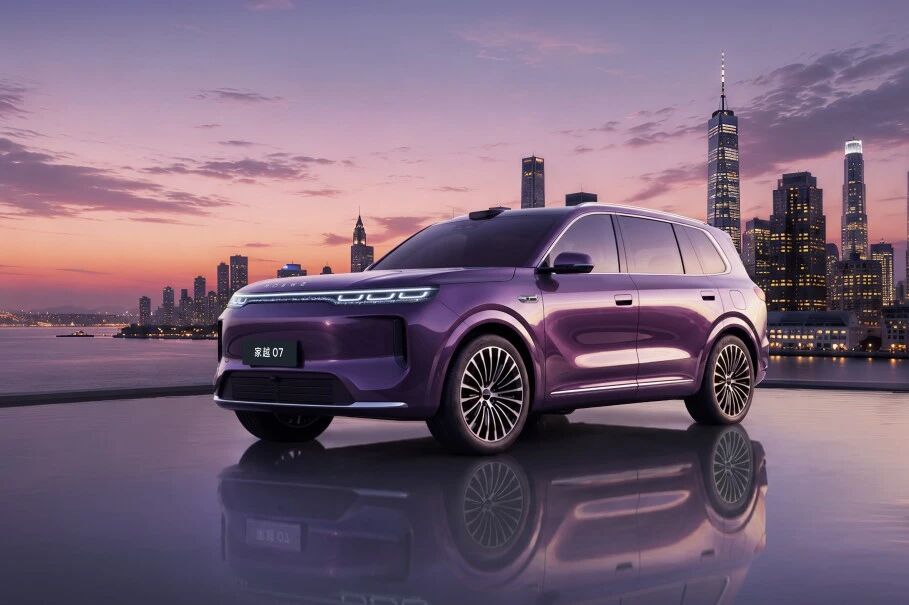
The CEA architecture, developed in just 18 months, is Volkswagen's first zone-based EEA. It enters production from the end of 2025 and will be fitted to five locally produced VW brand electric models in 2026: the 与众06, 与众07, ID.ERA5X, ID.AURA T6 and ID.AURA L5. Software updates are planned every three months, with a major architecture upgrade every two years. By 2027, CEA will extend to plug-in hybrid and petrol models, and by 2029 version 3.0 will support full-domain agent AI, enabling L4 development.
On the ADAS front, CARIZON's HS8 is a full-scenario L2++ system that will appear in seven new electrified models across three joint ventures in 2026, supporting urban and highway NOA (navigation on autopilot) and all-scenario parking. It offers both pure vision (128 TOPS) and lidar (420 TOPS) variants. Volkswagen plans to have L3-ready functionality by 2027 and is developing a self-designed system-on-chip called C7H for L4. The company has already obtained an L3 road test license in Hefei.
Efficiency gains and global expansion
Volkswagen China has also developed an AI toolchain called C-Brain that accelerates software development. Software function testing time has been cut from 2-3 days to 2-3 hours, and bug fixing from about two weeks to 20 minutes, according to the company. The GAIA2.0 AI world model runs simulations equivalent to 5 million km of real driving daily, aiming for 10 million km per day.
Volkswagen emphasizes that VEGA maintains its 'golden standard' for safety and reliability. Platforms undergo rigorous validation, including a 24K long-stroke road simulation rig that replicates 15 years or 300,000 km of road load. In severe collisions, motor torque can be cut within 5 milliseconds, and high-voltage battery systems can drop to safe voltage levels in 5 seconds – twelve times faster than the 60-second national standard. CMP and CSP models are expected to achieve five-star C-NCAP ratings.
On the same day, Volkswagen China outlined its 'In China, Beyond China' strategy, planning to introduce Chinese-developed technology to South America first, with the region becoming the first to adopt Chinese R&D in its local product lineup by 2030. Exports of China-made VW and Jetta models already reach the Middle East, Uzbekistan, Kazakhstan and sub-Saharan Africa, with expansion to Mexico, Egypt and Vietnam by the end of 2026. By 2026, China-built models will be exported to seven markets.
The VEGA launch marks a shift in Volkswagen's China R&D from capability building to system output. As NetEase Auto notes, this provides a template for multinational automakers: using Chinese speed to restructure development processes while maintaining Volkswagen standards for safety and quality.