Unitree Robotics, the Chinese maker of humanoid robots, has unveiled the G1+, a major upgrade to its G1 humanoid robot. The new model brings six improvements across movement, perception and interaction, while keeping the G1's cost-effective positioning. The standard G1+ is priced at 95,000 yuan (about $13,400) including tax, according to IThome (IThome). The G1+ EDU version, aimed at research and deep development, has not yet been priced.

Stronger joints and a more expressive head
The G1+ adds a 2-degree-of-freedom neck structure, allowing pitch from about -25° to 36° and yaw up to ±110°, making head movements more natural during observation and interaction. The whole motor system has been upgraded: shoulder and waist motors see a 110% peak torque increase, with heat generation down 72% at the same torque; arm motors get 43% more peak torque with 30% less heat; and thigh motors run 28% cooler at the same torque. The motors still use a low-inertia high-speed internal-rotor permanent-magnet synchronous design, paired with local air cooling, industrial-grade crossed-roller bearing output shafts and dual encoders for better response, load capacity and sustained operation.

Better eyes and ears
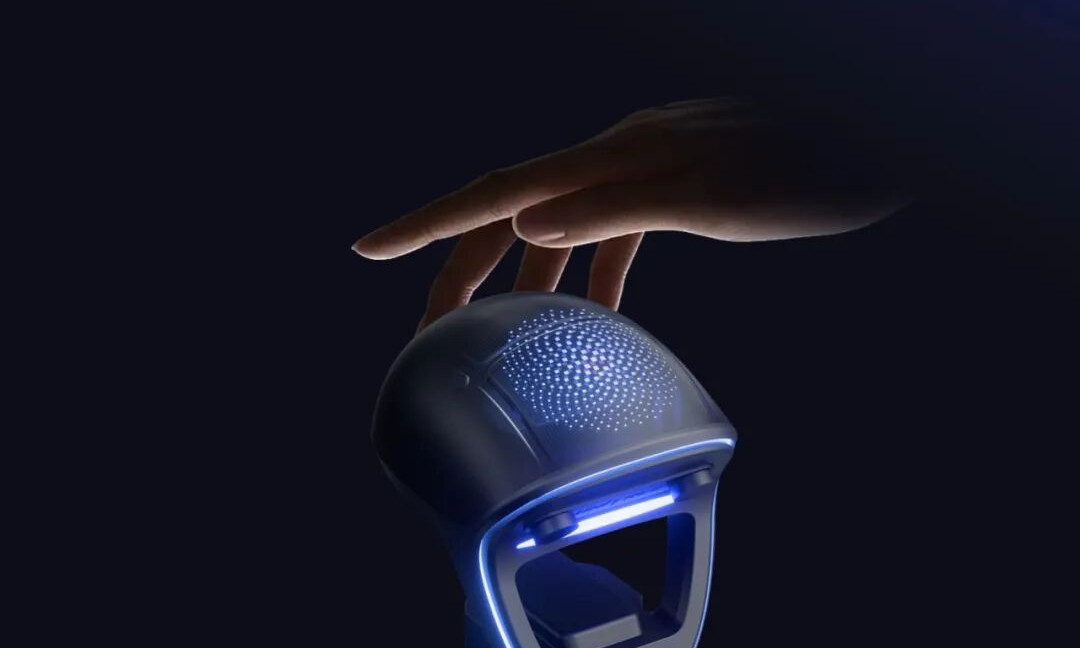
For perception, the G1+ uses a dual-camera setup with a binocular camera and a wide-angle monocular camera. The binocular camera has a 60mm baseline, 2-megapixel resolution, central resolution of at least 500LW/PH, and a field of view of 110° horizontal, 80° vertical and 125° diagonal. The wide-angle monocular camera offers 1920×1080 at 30fps with a 117° horizontal and 67° vertical field of view. Combined with a 3D LiDAR and a belly wide-angle camera, the robot gains improved depth perception and spatial understanding. For interaction, the head integrates five high-sensitivity touch points, and a 6-microphone array (four front, two rear) supports DOA sound-source localization, noise reduction and echo cancellation. An external wireless microphone is supported with a claimed 50-meter range and 80dB signal-to-noise ratio, and dual 10W speakers in the waist enable long-distance voice interaction in noisy environments.
Longer runtime and more power
For research and display scenarios that need continuous operation, the G1+ adds an external power port on the back (DC 54.6V, 5.7A), allowing sustained power beyond the battery. The robot uses a 13-series lithium battery with a 9000mAh quick-swap design, a standard 54V/5A charger, and a claimed runtime of about 2 hours. It retains OTA updates, WiFi 6, Bluetooth 5.2, an 8-core high-performance CPU and a handheld remote controller.
The G1+ stands about 1340×450×200mm with arms, folds to about 690×450×300mm, and weighs about 35kg. The standard version has 25 joint motor degrees of freedom: 2 in the head, 6 per leg, 1 in the waist, and 5 per arm. The leg length (thigh plus calf) is 0.6m, arm span about 0.45m, and maximum arm load about 3kg. The G1+ EDU extends to 25+45 degrees of freedom, with an optional 3-degree waist, an optional 7-degree dexterous hand with 2 additional wrist degrees, and arm load increased to about 4kg. The EDU version also supports multiple high-compute modules (such as Orin), secondary development, and an extended warranty of 18 months versus 8 months for the standard version.