Great Wall Motor's new flagship SUV, the H10, has been put through its paces on a high-altitude test drive in southern Xinjiang, and the results suggest the large plug-in hybrid (PHEV) can handle everything from city commutes to light off-roading. The test, reported by Autohome, covered the winding Panlong Ancient Road and the Pamir Plateau, where thin air at 4,200 metres often saps power from petrol engines.
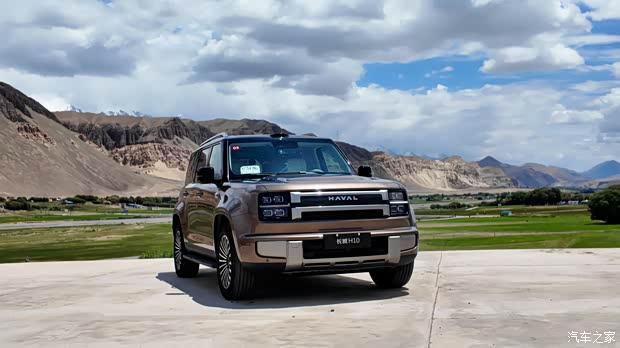
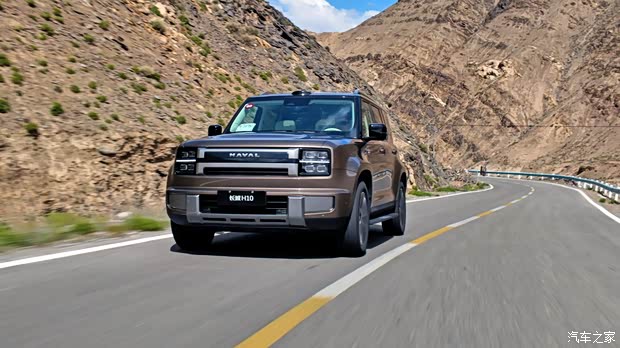
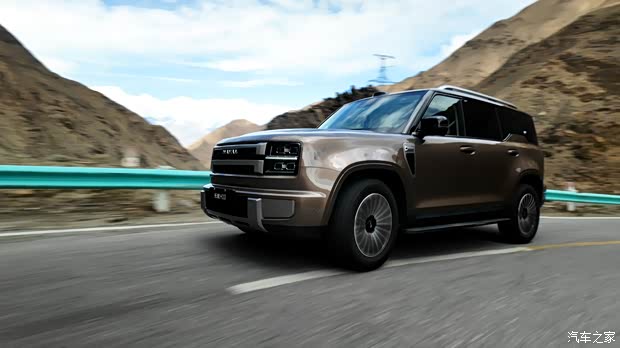
The H10 is a boxy, 'fang-kuai' (square-box) design, a style popular in China's SUV market. It is a large SUV, with the six-seat version stretching 5,299 mm in length, nearly 2,000 mm wide, and weighing over 2.5 tonnes. Despite its size, the car felt agile on tight mountain bends, thanks to a unibody construction with an integrated ladder frame and a low-mounted battery pack that lowers the centre of gravity. Body roll was well controlled, avoiding the wallow typical of traditional off-roaders.
Comfort and technology
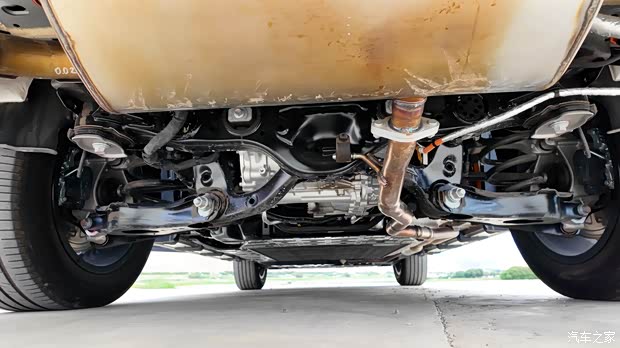
The H10 uses a front double-wishbone and rear five-link suspension with electronically controlled dampers and a road-preview system. On rough national roads, the system adjusts damping in real time to smooth out bumps, keeping passengers comfortable. Off the tarmac, the suspension retains enough compliance, and with 220 mm of ground clearance, it can handle most light off-road situations. There is no air suspension, but the standard setup proved sufficient.
Standard equipment includes a lidar sensor and 27 high-precision sensors for the advanced driver assistance system (ADAS), a setup already used in other GWM models like the Tank and Haval lines. On open roads, the system performed well, handling adaptive cruise and lane changes smoothly. However, it struggled with temporary traffic lights, failing to recognise them and slow down, and was overly cautious on low-speed hairpin bends. Autohome suggested a future upgrade allowing driver intervention without disengaging the system would improve the experience.
Powertrain and off-road capability
Power comes from GWM's second-generation Hi4 hybrid system, combining a 1.5-litre turbo engine with front and rear electric motors for all-wheel drive. The system eliminates a traditional driveshaft, improving response and efficiency. A four-speed DHT gearbox prioritises economy on tarmac, while a low gear mimics a 4L mode for off-road torque multiplication. This setup avoids the power loss that plagues petrol engines at altitude, a key advantage for highland driving.
The H10 offers a claimed CLTC combined range of 1,404 km and a CLTC pure-electric range of 232 km (roughly 1,170 km and 193 km respectively under the more realistic WLTP test, estimates). It has seven driving modes, including three road modes and four off-road modes (snow, mud, sand, and 4WD), plus an iTVC torque vectoring system that distributes power to wheels with grip. A rear electronic locking differential helps with moderate off-road obstacles like cross-axle situations. Approach angle is 24 degrees for both versions, with departure angles of 30 degrees for the five-seat and 25 degrees for the six-seat; wading depth is 600 mm. An off-road display shows pitch, roll, and altitude.
The H10 is expected to open for pre-sales soon, with pricing yet to be announced. Autohome's verdict: it dispels doubts about the 1.5-litre engine's adequacy and the 'boxy' design's practicality, offering a versatile package for families who want one vehicle for city, highway, and light off-road use.