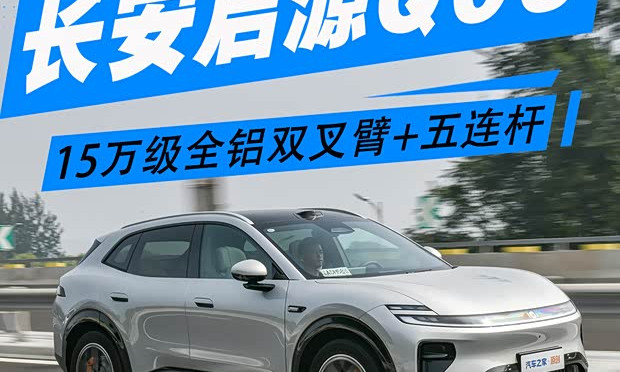
Geely's compact electric hatchback, the Xingyuan, is proving that advanced driver assistance doesn't have to cost a fortune. According to Chinese automotive outlet Autohome, which tested the car in Beijing's evening rush hour, the model's "Qianli Haohan H3" system—a name that translates to "Thousand-Mile Vast"—handles highway navigation and automated parking with confidence, all for a guide price under 100,000 yuan (about $14,100) before taxes and incentives.
The Xingyuan's sensor suite is generous for its price class: 12 high-definition cameras, three millimeter-wave radars, and 12 ultrasonic sensors. This hardware foundation supports features like remote parking (the car can park itself while the driver stands outside) and voice-activated lane changes, where saying "change left" or "change right" triggers a smooth, well-timed maneuver.
Parking and highway NOA tested
Autohome's test focused on two scenarios: tight parking spots and highway navigation. In narrow spaces where neighboring cars encroached on the lines, the Xingyuan still identified usable spots and executed precise, smooth parking maneuvers. The remote parking feature proved especially handy in cramped side-by-side situations, with the car controlling speed and steering to slot in cleanly.
On the road, the system supports navigation on highways and urban expressways—a feature often called highway NOA (navigation on autopilot). In Beijing's dense, aggressive traffic, the ADAS (advanced driver assistance system) adopted a conservative, safety-first approach, keeping generous following distances. That left room for other drivers to cut in, which Autohome noted reduced efficiency in stop-and-go conditions. However, the voice-triggered lane change was responsive and executed with confidence, and the car handled highway ramps well, anticipating exits and changing lanes early.
Not without flaws
The test also revealed shortcomings. On one highway merge, the system triggered a phantom brake—an unexplained deceleration—and in complex intersections with worn or messy lane markings, the planned trajectory lacked precision. The conservative calibration, while safe, made the car less agile in heavy traffic, potentially frustrating drivers in a hurry.
Despite these issues, Autohome praised the overall performance, noting that no safety interventions were needed during the entire test. The Xingyuan, which is a BEV (battery-electric vehicle), demonstrates that capable ADAS is becoming accessible in China's budget segment, a trend that could pressure rivals to match its value proposition.