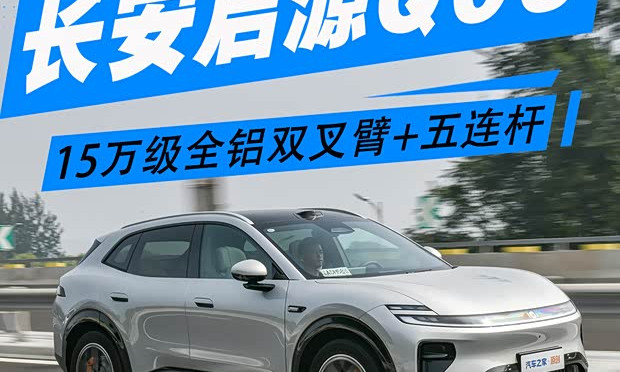
Autohome has published a detailed first-drive review of BYD's third-generation Yuan Plus, a battery-electric SUV priced in the 100,000-150,000 yuan (about $14,100-$21,100) guide-price segment in China before taxes and incentives. Reviewer Wang Zeshi says the new Yuan Plus is one of the most thorough upgrades BYD has made in this class, with packaging, ride quality and daily usability all moved up, while the optional city assisted-driving system still leaves room for caution.
The most obvious gains are inside. A panoramic glass roof measuring one square metre comes with an electric sunshade, and moving the gear selector to a column stalk frees up the centre console, giving BYD room for a 50 W wireless charger, stepped cupholders, an integrated tissue box and a car fridge that cools from -6 to 50 degrees Celsius. The top trim adds a zero-gravity passenger seat, electric thigh support and a heated steering wheel. Door handles return to conventional mechanical pulls. Under the front seats are storage drawers of about 9 litres each, and because the electric motor now sits at the rear, the front end gains a 180-litre frunk that accepts a 24-inch suitcase.
Autohome was more impressed by the chassis. The third-generation car gets a five-link rear suspension, and BYD has brought its DiSus-C intelligent body control system down from models such as the Song L. The reviewer says compression and rebound are soft but crisp over speed bumps, manhole covers and broken surfaces, rear-seat jolts are reduced compared with the old car, and body roll on motorway lane changes is smaller than on many family SUVs at the same price. Standard second-generation Blade batteries and BYD's fast-charging technology let the test car go from 47% to 97% charge in 6 minutes 15 seconds, according to Autohome.
The Yuan Plus also remains easy to thread through cities. BYD claims a turning radius of 4.7 metres, and Autohome says tight U-turns that force many cars into a reversing manoeuvre can be done in one pass.
Where the third-generation Yuan Plus still falls short
Autohome flagged three problem areas. The powered front trunk closes with noticeable force and its anti-pinch sensitivity is not high enough, which the reviewer says needs attention in households with children. Wind noise around the A-pillar becomes obvious at higher speeds, and the reviewer had to raise the stereo volume by two steps to mask it.
The biggest caveat concerns the optional God's Eye-B system, BYD's urban NOA (city advanced driver assistance) package, priced at 12,000 yuan (about $1,690) in China before taxes and incentives. In a roughly 90-minute test over city main roads, junctions and ramps, it handled unprotected left turns, ramp entries and exits, and yielding to pedestrians and cyclists with confidence. But it also made mistakes. At a bridge underpass, it followed a car making a U-turn and wrongly committed to the U-turn route, only correcting after returning to the original point. In tidal-flow lanes, it twice misjudged empty lanes during prohibited hours and executed lane changes.
Autohome's conclusion is that the system is not yet reliable enough for drivers to switch off, while its highway behaviour - speed control, following and lane changes - was decisive and error-free. The overall verdict is that the third-generation Yuan Plus is a well-rounded product for the 100,000-150,000 yuan class, with several features borrowed from BYD's more expensive models. Buyers should simply be careful opening the front trunk and keep realistic expectations for city assistance.