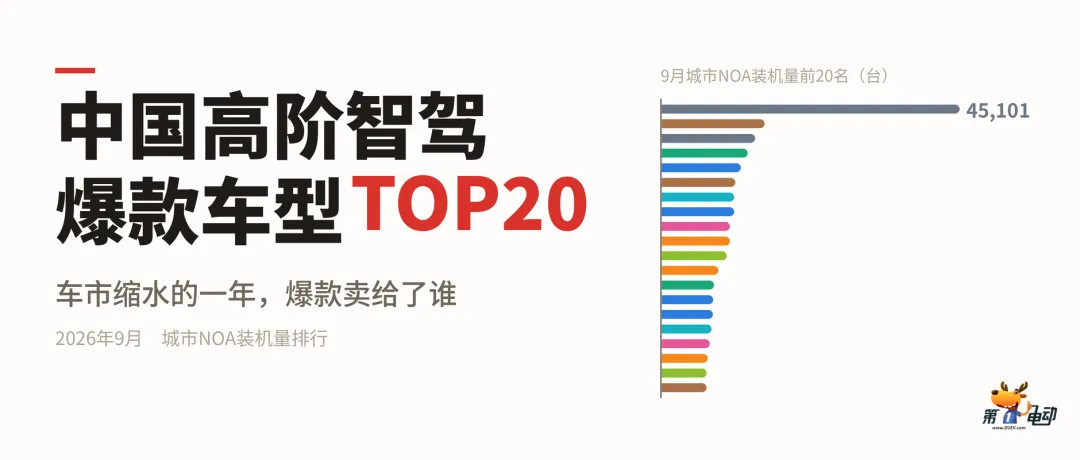
Mainstream joint-venture brands in China posted a 35% year-on-year jump in new-energy vehicle (NEV) retail sales in August, a rare bright spot in a market where overall NEV retail fell 10.1%, according to a report from Chinese outlet D1EV. The growth, however, masks a persistent weakness: of the 66 joint-venture NEV models with recorded sales, 60% sold fewer than 1,000 units in the month, and only one model - Toyota's Bozhi 3X - topped 5,000 units.
The August data, compiled by D1EV from retail figures, showed NEV penetration among mainstream joint-venture brands at just 13.4% in domestic retail, versus 83.9% for Chinese self-owned brands and 38.9% for luxury marques. In wholesale terms, joint-venture NEV penetration reached 15.7%, compared with 74.3% for self-owned brands. The joint-venture share of total NEV retail fell to 4.3%, down 6.1 percentage points year on year.
Winners and losers among joint-venture EVs
Among the top 20 selling joint-venture NEV models, only a handful sustained three consecutive months of growth: Toyota's Bozhi 3X and Bozhi 7, Toyota bZ3, Mazda EZ-60 and Mercedes-Benz GLC EV. D1EV noted that Changan Mazda's models have quietly gained traction, with much of its volume coming from exports - a useful growth channel. On the losing side, models that declined for three straight months include Nissan NX8, Audi E7X, Volvo XC70, ID.ERA 9X and Nissan N6/N7.
The report highlights a paradox: many of these are deeply China-localised products, yet they fail to hold momentum after an initial sales spike. Ten models sold in single digits in August, with Volvo, Mercedes-Benz and Cadillac accounting for three, three and two of them respectively.
Toyota, despite the Bozhi 3X's relative success, saw the Bozhi 7 fall short of expectations, while FAW Toyota's bZ3 and bZ5 hovered around 1,000 units a month. Volkswagen, which operates three joint ventures in China and fields the largest NEV lineup among foreign brands, saw its best seller - the newly launched ID.ERA 5S - reach just 1,485 units in August, with most other models far behind. Buick's NEV performance was weak, with the Buick Zhijing E7 sliding further, though the Buick GL8 PHEV (plug-in hybrid) posted a rare gain.
Why joint-venture EVs struggle to win buyers
Nissan's situation is the most striking, D1EV said. Dongfeng Nissan was among the earliest and deepest localised joint ventures in electrification, yet every model it launches sells poorly. The NX8, positioned as a star product in a mainstream segment, has declined since launch.
With NEV penetration in China having at times exceeded 70%, the report asks why joint-venture NEV products - some of which look competitive on paper - still fail to persuade consumers. The answer, it suggests, may lie in brand perception, channel execution and the speed of product iteration, rather than in the vehicles themselves. The report also noted that a planned consolidation of Toyota's two China joint ventures could bring more and better NEV models to market, though it offered no timeline.