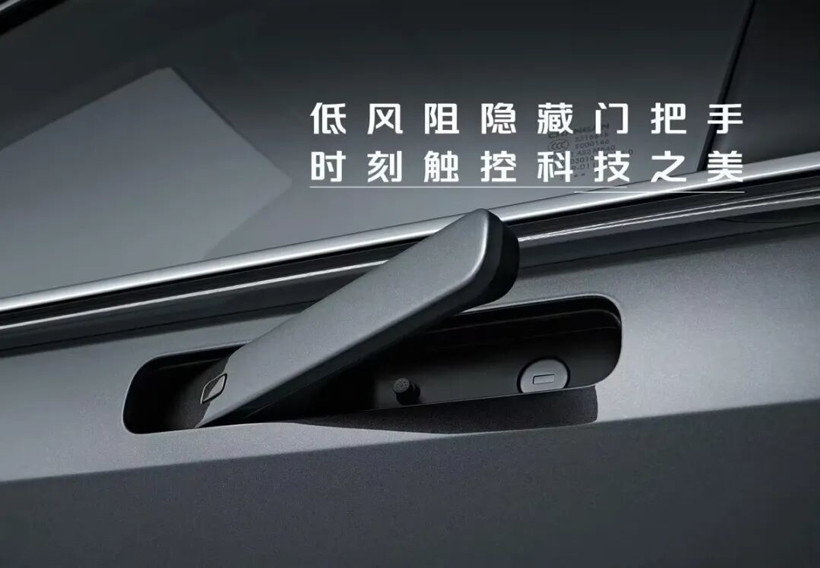
China's Ministry of Industry and Information Technology (MIIT), together with the Ministry of Public Security, the Ministry of Ecology and Environment, and the State Administration for Market Regulation, published a draft notice on October 10 that would tighten testing and validation requirements for innovative vehicle features such as virtual controls, hidden door handles, new human-machine interfaces, and high-angle seats.
The move comes as the People's Daily, the official newspaper, published a commentary criticizing what it calls 'fast-food cars' (速成车) – a term used in the industry for models rushed to market by automakers that compress development cycles and skip physical validation to grab market share. According to the article, some executives have admitted at industry forums that multiple mandatory tests are omitted to meet launch deadlines, effectively turning consumers into 'test drivers'.
Testing shortcuts and their consequences
Under normal development, a new model must undergo calibration of braking, steering, handling stability, ride comfort, and powertrain performance, plus endurance testing in extreme environments such as high temperatures, high altitudes, and severe cold. Zhu Xichan, a professor at Tongji University's School of Automotive and Energy, has noted that a full vehicle road test typically requires 'two winters and two summers' – even a minor facelift demands at least one winter and one summer and 30,000 km of real-road testing.
However, the commentary highlights widespread shortcuts. One EV maker's door handle durability test involved only 2,000 physical repetitions out of 10,000, with the rest done by simulation. Another automaker used physical testing for just 20 percent of its validation, relying on simulated data for the remainder. Such practices have already led to failures: during Chongqing's extreme heat above 40°C this summer, several models experienced air spring leaks and one-sided body sagging, exposing inadequate hot-weather validation.
The tightening of rules was foreshadowed in July, when the National Technical Committee of Auto Standardization sought public comment on raising the minimum total endurance test distance for three types of new energy vehicles to 30,000 km, aligning them with conventional gasoline cars. Industry insiders see this as a 'coming-of-age' for EVs, marking a shift from a 'cultivation-first' to a 'regulation-first' approach. In August, MIIT and other agencies launched a year-long campaign to inspect production consistency, reliability, durability, and testing of new technologies.
Stability over speed
The People's Daily commentary stresses that safety is a red line for the auto industry. Automakers should improve development efficiency without sacrificing quality and safety, and the core competitiveness of new products should be technical capability and productivity, not cutting essential test procedures. For China's auto industry, especially the new energy vehicle sector, 'stability' is a more sustainable 'speed', and the whole industry must jointly protect hard-won consumer trust and reputation, according to PCauto, which reported the story.