China has recalled 121 million vehicles since its defect-recall system began in 2004, against a national fleet of about 340 million cars by mid-2026, according to the country's market regulator. That means roughly one in three vehicles on Chinese roads has been through a recall at some point. Most of those recalls accumulated during the petrol era, but regulators now say the intelligent, electrified age is making the system far harder to run.
Speaking at the 2026 TEDA Auto Forum, Xiao Lingyun, director of the industrial products institute at the State Administration for Market Regulation's recall technology centre, said recalls in the smart-car era should no longer be treated as the sole responsibility of vehicle manufacturers. The rules and standards governing quality supervision and recalls are changing, he said, according to First Electric (D1EV).
A central problem, Xiao said, is the rise of what industry insiders call "fast-made cars" — models rushed from concept to showroom in as little as 12 to 18 months, down from the three to four years typical of the past. The pressure flows straight down the supply chain. Wang Xianbin, vice president of research at Gasgoo, told an industry forum that when a new model is developed in 12 months, suppliers may have only three to four months for their own development and validation work.
Recalls shift from hardware to software
OEMs control product definition, purchasing and development milestones, and are the main force compressing timelines to cut costs. But suppliers are adapting to the same competitive logic, with some cutting prices and promising tight delivery schedules to win orders from leading customers, even if it means trimming internal validation. In the lidar sector, for example, some suppliers have bid at levels rivals consider unsustainable, telling Gasgoo they would accept losses to gain scale and survive.
When schedule pressure meets the limits of testing, validation is often the first casualty. Winter testing, for instance, has a window of only three to four months per year, and components still need real-road exposure to extremes of heat, cold and durability. EV validation is even more complex, covering batteries, intelligent features and software-hardware integration. Earlier this decade, some automakers shipped vehicles with hardware pre-installed but functions unfinished, promising to complete them later via over-the-air (OTA) updates — pushing development and verification work past the point of sale.
"Semi-finished" cars have become rarer, but white-box development and rapid integration of third-party solutions remain common, and some unconventional styling choices have left safety gaps. Liu Zongcheng, president of Seres Group's technology arm, warned that "the biggest risk in the auto industry is not being slow, but being fast-made." The eventual bill for problem vehicles is recall, with costs that can reach hundreds of millions of euros.
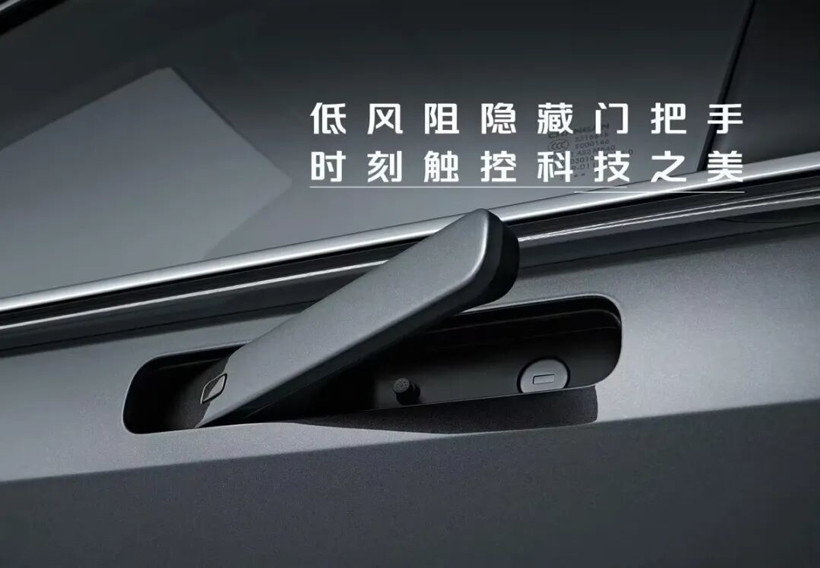
On August 21, nine automakers recalled about 4.28 million vehicles on the same day over interior emergency mechanical door-release handles. Flush door handles have become a popular design feature touted for lower drag and cleaner looks, but in extreme accidents the emergency release can blend into the interior trim, and occupants may fail to find it in time to escape.
Driver-assistance systems face similar validation challenges. In 2024, multiple recalls triggered by ADAS (advanced driver assistance) defects covered 2.56 million vehicles, about a fifth of the year's total recalls.
Who answers for a battery, a chip or a software bug?
Xiao said the recall system now confronts questions the old framework never had to answer. Under a battery-swap model, who is responsible for battery safety? If a defect originates in a driver-assistance system supplied by a specialist company, can that supplier be the subject of a recall, and what obligations does it carry?
China's current recall regulation centres on the vehicle manufacturer. But as intelligent cars integrate batteries, chips, software and ADAS from multiple companies, defects increasingly need to be traced across corporate boundaries. OEMs remain ultimately responsible for the finished vehicle, but the duties of suppliers in defect investigation and rectification are still unclear.
Collaboration has deepened into co-definition and joint development. Seres has built a "1+2+N" structure — itself, plus Huawei and CATL, plus a network of global partners. Yijing Auto is jointly created by Dongfeng and Huawei's Qiankun programme. Such models mean a defect may lie in a single component, in software-hardware matching, or in the interaction of several systems, and checking only the OEM's production line may not find it.
Software adds another layer. Traditional recalls targeted hardware faults, but connected vehicles can fail through software updates, control strategies or data handling. Regulators have already flagged OTA-related problems: one model lost automatic emergency braking after a faulty image-processing update, and another developed new faults two years after an OTA upgrade. Battery "locking" — automakers quietly altering battery management parameters under the banner of safety optimisation — is another concern.
China's recall regulation is being revised, Xiao said. Regulators are also pushing risk identification earlier, through what he described as a "three-line" approach: market access as the baseline, sandbox testing to raise the bar, and recalls as the bottom line. More than 200 vehicles have already been improved through sandbox testing, avoiding mass recalls, and major automakers are enrolling new intelligent models in the programme. A new accident-reporting requirement obliges companies to report intelligent-driving incidents promptly, feeding a database of dangerous scenarios from which AI models generate new test cases for automakers. China has also issued its first national standard for automotive software quality and defect management, and has been publishing quality standards for power batteries with companies including CATL.