China's Ministry of Industry and Information Technology (MIIT) has published draft rules that would force automakers to prove their new models are thoroughly tested before they can be sold, a direct response to what regulators describe as a wave of 'rushed' vehicles that rely on over-the-air updates to fix problems after launch.
The draft, released on October 10 and co-drafted with the Ministry of Public Security, the Ministry of Ecology and Environment, and the State Administration for Market Regulation, aims to 'prevent innovative designs with safety hazards and products that have not been fully tested from entering the market,' according to the document.
The move follows years of intense competition that has compressed vehicle development cycles, with some automakers shifting testing from physical prototypes to computer simulations and shipping cars before all issues are resolved, relying on remote software updates to patch problems later. Recent incidents, such as a viral video showing a braking pedal bracket breaking on a Zunjie V800 during a test, have intensified public scrutiny over whether testing is rigorous enough.
What the new rules require
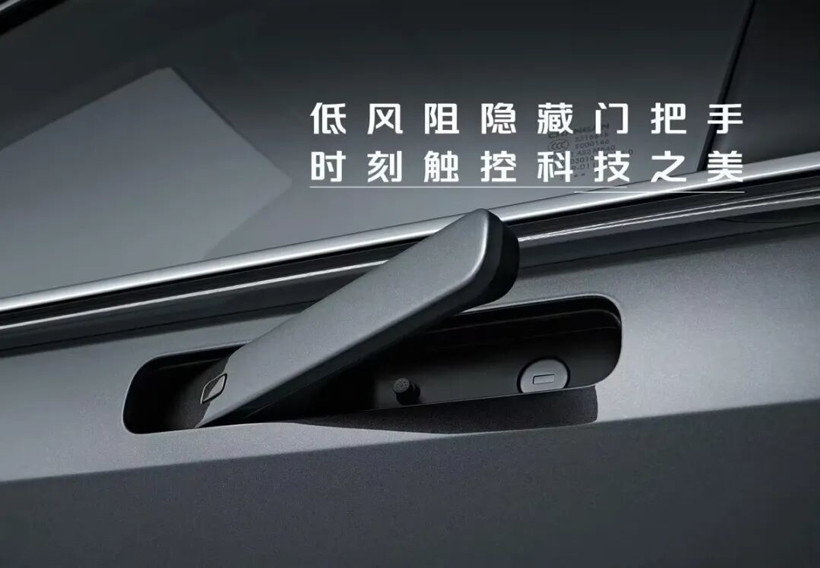
Under the proposed rules, starting January 1, 2027, automakers applying for new models that involve innovative designs or new testing methods must submit a 51-item technical parameter table, covering everything from hidden door handles to advanced driver assistance systems (ADAS). The MIIT will refuse to approve vehicles that fail to meet testing requirements or are found to have falsified test data.
Key requirements include a reliability test of at least 30,000 km (about 18,600 miles) covering reinforced rough roads, highways, and mountain roads; an environmental adaptability test spanning at least one year, including winter and summer conditions; and, for new-energy vehicles, real-world testing of battery cycle life and durability. Even software features like ADAS and smart cockpits must undergo real-vehicle testing, with simulation and bench tests only as supplements.
Facelift models are not exempt. Adding a new drive motor, electronic control system, or energy storage device will require the same real-vehicle testing documentation.
The draft also bans certain designs outright. Fully hidden door handles are prohibited, and powered doors must have anti-pinch features and manual override in case of power failure. Touch or pressure-sensitive virtual buttons controlling critical functions like lights, wipers, or defrosting must be accompanied by physical buttons, and emergency escape and braking controls must have physical buttons and clear markings.
Zero-gravity, rotating, or fold-flat seats must be validated for pinch protection, crash safety, and locking reliability, and cannot be used while driving. Large center screens and complex head-up displays must be assessed for driver distraction, and foldable or flexible screens are banned.
Implications for automakers
The rules also require automakers to conduct their own incoming inspections of critical safety software and hardware, rather than relying solely on supplier test reports, extending testing responsibility up the supply chain.
For traditional automakers with established durability testing, the new requirements mainly add paperwork. But for newer brands that compete on rapid iteration, the rules could slow product launches significantly, as they must complete a full 'two winters and one summer' testing cycle before applying for approval.
ADAS and smart-cockpit features may also see slower rollout, as extreme scenarios must be tested in real vehicles, marketing claims must be more conservative, and OTA updates will need documented approval. The draft is open for public comment until the end of the year.