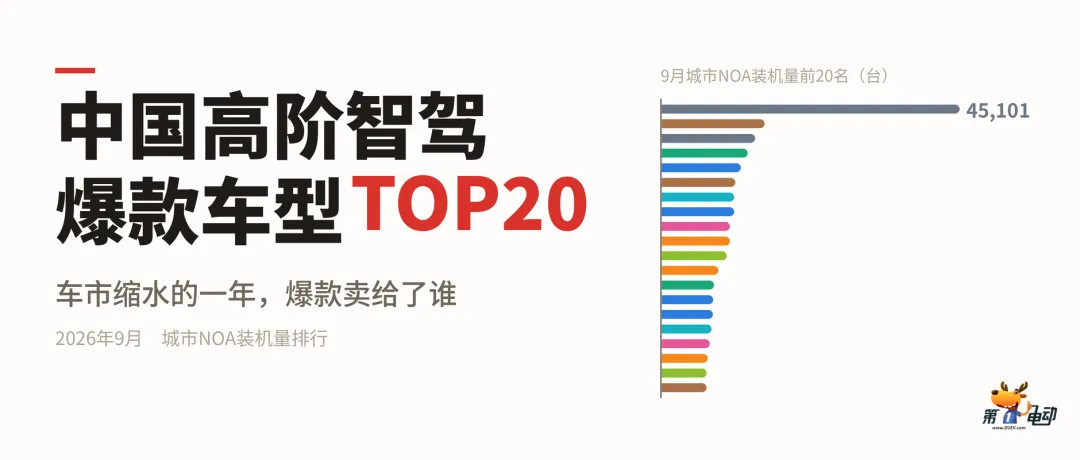
Every one of the 10 best-selling passenger cars in China in August was a new-energy vehicle (NEV), with not a single petrol model on the list, according to Chinese business publication Huxiu. The August retail ranking contained only electric and other new-energy models: Geely Xingyuan, Leapmotor A10, Tesla Model Y, BYD Yuan UP, Tesla Model 3, Changan Qiyuan Q05, Li Auto i6, BYD Dolphin, Xiaomi SU7 and Wuling Bingo Pro.
The milestone was not a one-month fluke. Huxiu noted that in January, seven of the 10 top sellers were petrol models; by March that number had fallen to five, and by April only the Geely Binyue remained. Fuel cars disappeared from the top 10 for the first time in May, briefly returned in June and July with models such as Camry, Lavida and Corolla Cross, and were wiped out again in August.
A greener mix, a smaller market
Data from the China Passenger Car Association (CPCA) underline the shift. In August, retail sales of conventional fuel passenger cars fell 40% year on year to 540,000 units, while NEV retail reached 1.005 million units and penetration hit 65.2%. Roughly two of every three passenger cars sold in China that month were new-energy models.
Huxiu cautions, however, that the all-NEV top 10 should not be read as a reason to celebrate. Overall passenger-car retail fell 23.6% year on year to 1.541 million units in August, and NEV sales themselves dropped 10.1% from a year earlier. Fuel cars declined faster, inflating NEV share, but the total market did not grow. The advantage NEVs have won so far is mainly substitution, the publication argues, not a wave of first-time buyers or a pull of existing owners back into showrooms.
The same tension shows up in industry profitability. CPCA data cited by Huxiu showed the auto industry profit margin for January-July 2026 was only 3.6%, well below the 6.5% average for downstream industrial enterprises. More launches, more discounts and more choices have not made the industry's bill any fatter, because replacing a petrol car does not necessarily create an extra buyer.
Exports are the bright spot
Overseas markets offer a wider road. According to the China Association of Automobile Manufacturers (CAAM), August vehicle exports reached 1.01 million units, up 65.3% year on year and above 1 million for a third consecutive month. NEV exports of 526,000 units accounted for more than half of that total.
CAAM data also show why exports cannot be translated into a domestic recovery: August domestic vehicle sales fell 24.2% year on year to 1.701 million units, with year-on-year declines above 20% for five straight months.
Huxiu argues the disappearance of petrol cars from the top 10 changes more than a monthly ranking. Used-car residual values, the 4S dealership model that dominates sales and after-sales service, and consumer expectations about how long a car should last are all being rewritten. Engines, gearboxes and chassis will not vanish, but they no longer monopolise buyers' attention. Software updates, battery health after several years, driver-assistance capability and charging convenience now sit on the same comparison sheet.
This is not an obituary for the petrol car, the publication says. It still has users and will remain around for a long time. But after August's list, the industry can no longer pretend fuel vehicles still stand at centre stage. For NEV makers, the harder task is convincing hesitant or delayed buyers to return to showrooms; only then will new energy have not just beaten petrol power but also expanded China's car market itself.