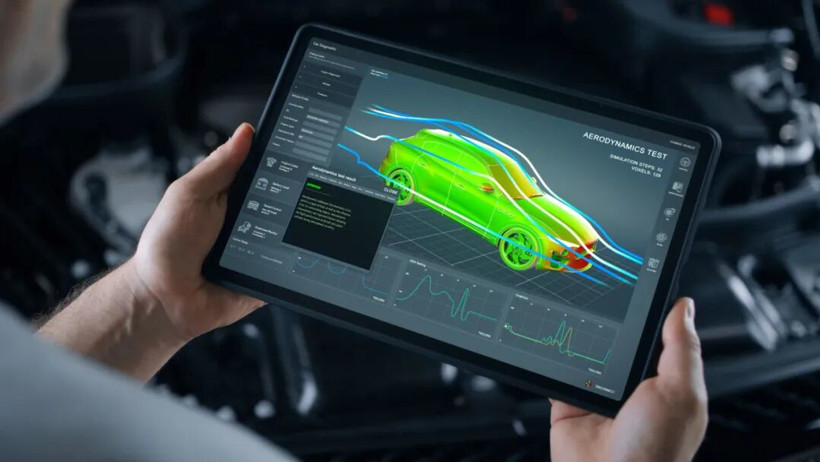
At its Shenzhen AI Day event, Baidu Apollo unveiled Apollo World, a multimodal world model it says can act as an "examiner" for L4 autonomous driving, testing vehicles in simulation before they hit public roads. The announcement, reported by Chinese outlet D1EV, comes as Baidu's robotaxi service Apollo Go operates in 28 cities worldwide, with over 23 million rides completed and a total autonomous driving distance exceeding 350 million kilometres (about 217 million miles).
Baidu's technical team argues that replay-based simulation, the traditional method of looping recorded sensor data, is no longer sufficient. In such systems, other road users follow fixed trajectories and do not react to the test vehicle's actions. If the vehicle behaves differently from the original recording, the scenario becomes invalid. "World-model simulation is not a 'painter that generates videos' but an 'examiner that verifies the safety of driverless driving,'" said Wang Liang, chief R&D architect and chair of the IDG technical committee at Baidu.
The 'impossible triangle' of L4
Wang said L4 autonomous driving has yet to cross the threshold of large-scale commercialization due to an "impossible triangle": achieving extreme safety, human-like driving experience, and full-scenario coverage across different cities and road conditions simultaneously. He attributed the difficulty to traditional modular architectures, where errors accumulate across perception, prediction, and planning layers, and which rely heavily on manual rules.
Real-world testing alone is not a practical solution, according to Yang Ze, head of Baidu's world model team. "On average, each model iteration requires more than 700,000 kilometres (about 435,000 miles) of real road testing with a human safety driver before it can be handed over to passengers," he said. That distance is equivalent to nearly 18 laps around the equator—and the process must be repeated for each new city or expanded area.
Baidu also highlighted the dangers of real-world testing. In one example, a couple arguing suddenly lay down in a vehicle's blind spot; in another, a pedestrian fell into a blind spot. Such scenarios require the system to make decisions in about 1/30th of a second. Extreme edge cases like "ghost" pedestrians or sudden lane intrusions are impossible to reproduce on demand in real traffic.
What makes a world model?
To address these challenges, Baidu proposed a "2+3" standard for evaluating world models. The first two criteria are basic requirements: causality and interactivity. Causality means the model must respect the order of events—past determines future, not the other way around. Interactivity means the vehicle's actions must genuinely alter the virtual environment. For example, if the ego vehicle changes lanes or brakes, other vehicles in the simulation should respond accordingly, changing their trajectories.
Baidu's Apollo World is designed to meet these criteria, enabling L4 systems to undergo realistic, interactive tests in simulation. The company believes this approach can reduce the cost and risk of validation while still ensuring safety. "The next 'exam room' for L4 is in the world model," the company said.