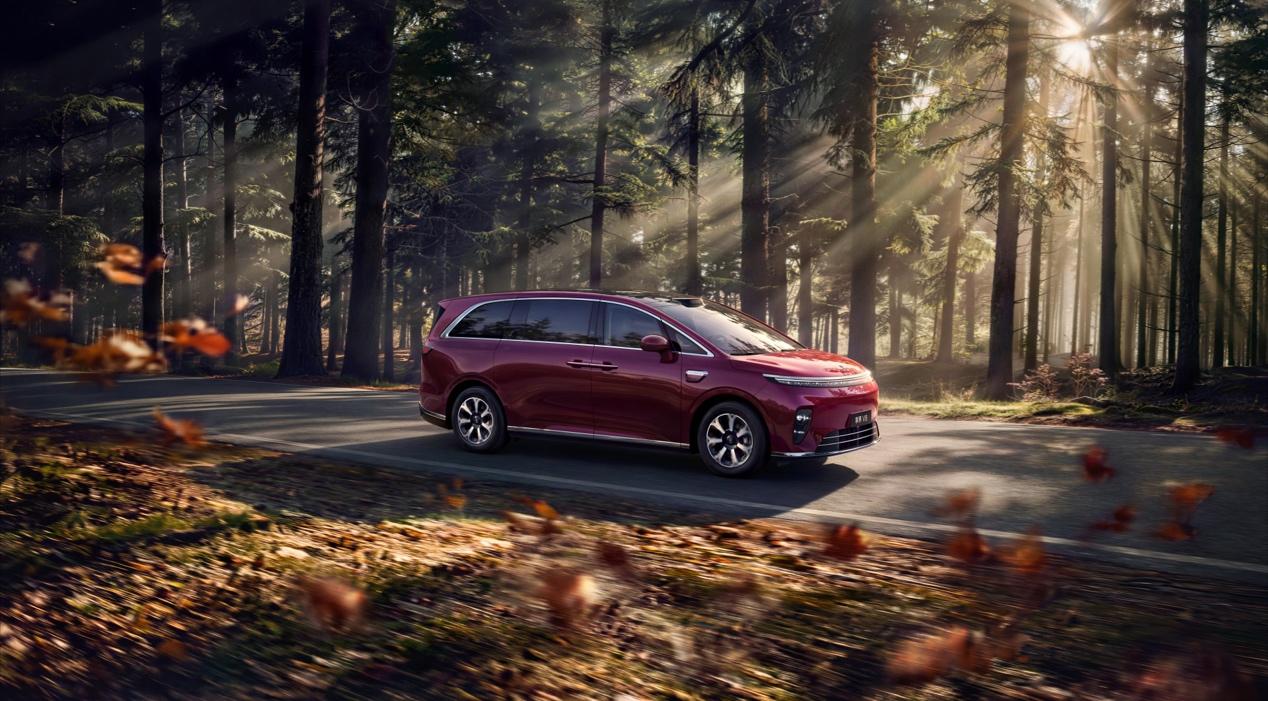
Avatr Technology, the premium EV brand backed by Changan and Huawei, opened its Chongqing test-vehicle base to the public for the first time on November 12, livestreaming a yard filled with 1,300 cars that had been battered in durability, climate, corrosion, water-fording and crash tests. The company values the fleet at about 600 million yuan (about $84.5 million), according to Sina Auto.
From price cut to public proof
The broadcast was a direct response to criticism that followed the October 29 launch of the Avatr 07L Max BEV (battery-electric) at a limited-time price of 215,900 yuan (about $30,400, Chinese guide price before taxes and incentives). Skeptics suggested the low price meant hidden cost-cutting. Avatr's counter-offensive escalated over two weeks: executives pledged no quality shortcuts, a November 9 teardown live show demonstrated that CATL batteries are fully integrated without mixing, and Huawei's 896-line LiDAR is not downgraded. The November 12 event, hosted by Avatr president Yong Jun with engineers and media, explained why each damaged car cannot be sold and what each scar represents, even staging a battery-smashing demonstration.
According to Sina Auto, the yard's 1,300 vehicles represent a book value of about 460,000 yuan (about $64,800) per car, higher than the price of most production models. Avatr said the 600 million yuan figure only covers the parking lot's inventory, not the full research and development investment.
Testing beyond the standard
Avatr detailed the nine-stage validation each model undergoes before launch: over 3.5 million km of all-scenario testing, more than 2.04 million km of reinforced durability runs, high-temperature (50°C) road tests exceeding 200,000 km, low-temperature (-40°C) tests over 250,000 km, more than 30,000 km of corrosion testing, over 5,000 km of impact-strength evaluation, more than 100 km of water fording, and at least 300,000 door-open cycles (about 84,000 per frameless door). The company also conducts crash tests on over 100 vehicles, aiming for five-star ratings in both C-NCAP and E-NCAP.
Engineers highlighted metrics that exceed national requirements: battery packs are soaked to IP68 standards for 48 hours versus the mandated 30 minutes, and continuous water-fording covers 7 km at varying depths and speeds. The Avatr 07L Max's main beam is nearly twice as wide as class rivals, and two 7,700-ton die-cast parts integrate 163 components into just two.
Yong Jun said: "There are no shortcuts in automotive R&D. You cannot save a cent on testing. It is acceptable to delay a car's launch, but safety cannot rely on luck."
The livestream tapped into a sensitive industry nerve. Traditional automakers needed 36 months or more to develop a new model, but the electric-vehicle era has compressed that to about 24 months, with some startups claiming 12 to 18 months. The pressure often falls on validation: design and production validation are merged, durability tests are trimmed, and simulation replaces some real-world testing.
Regulators are pushing back. On October 10, China's Ministry of Industry and Information Technology and three other agencies proposed rules requiring at least one year of environmental adaptability testing, including two winters and one summer, and a minimum of 30,000 km of reliability testing for new vehicle applications. The rules, effective January 1, 2027, would bar products with insufficient validation from being listed for sale. In the same period, the MIIT's 413th batch of new vehicle filings included 475 products, down 212 from the previous batch.
Avatr's move to publicize its "slow" approach is notable, but the broadcast's informational value is not identical to its promotional value. Test cars cannot legally enter the market—they lack the required government approval and certificates—so scrapping them is a compliance baseline, not a bonus. The livestream showed samples, not full data; viewers could not verify each car's test records or failure modes. The 600 million yuan is sunk cost that will be amortized into vehicle prices, proving investment scale but not necessarily quality leadership. Ultimately, the real verdict on Avatr's validation efforts will come from the production cars delivered after these tests, over the next five to ten years of use.